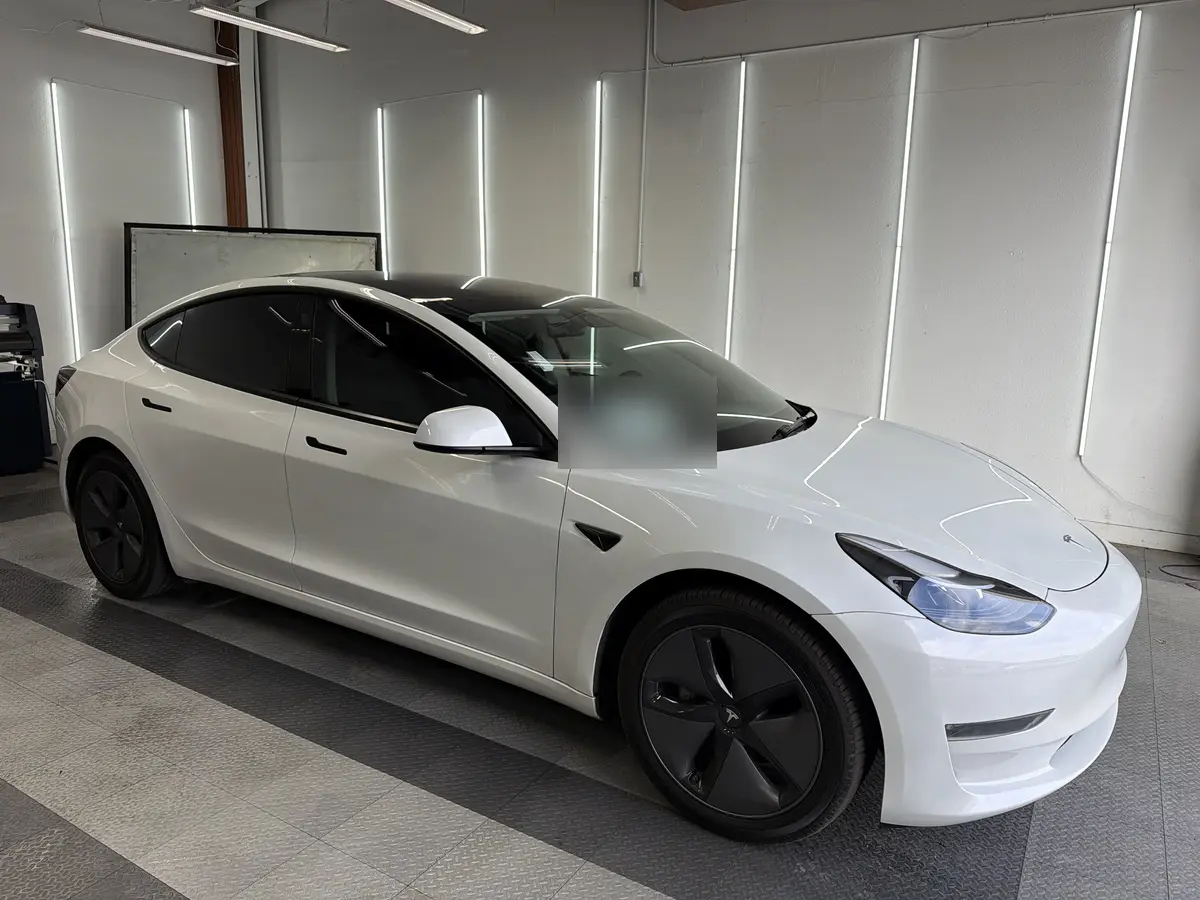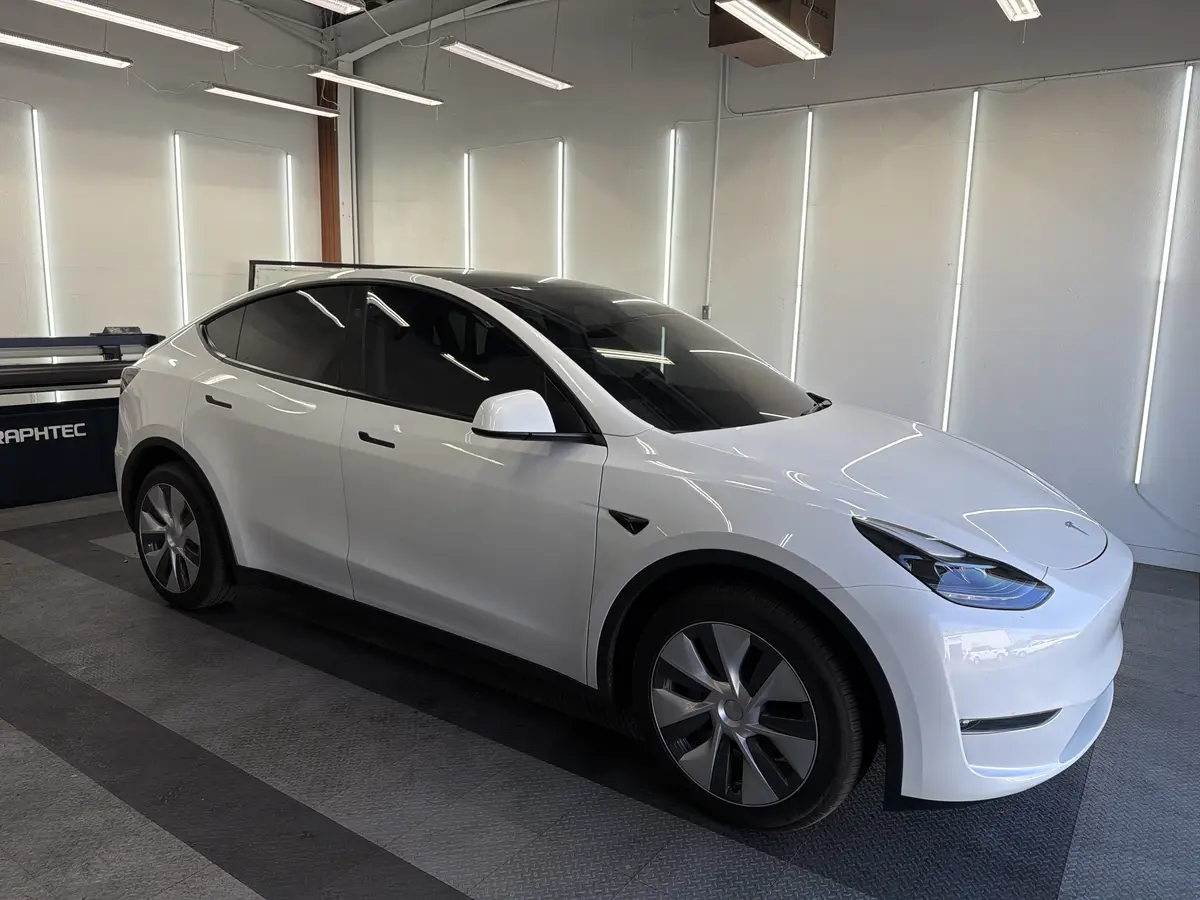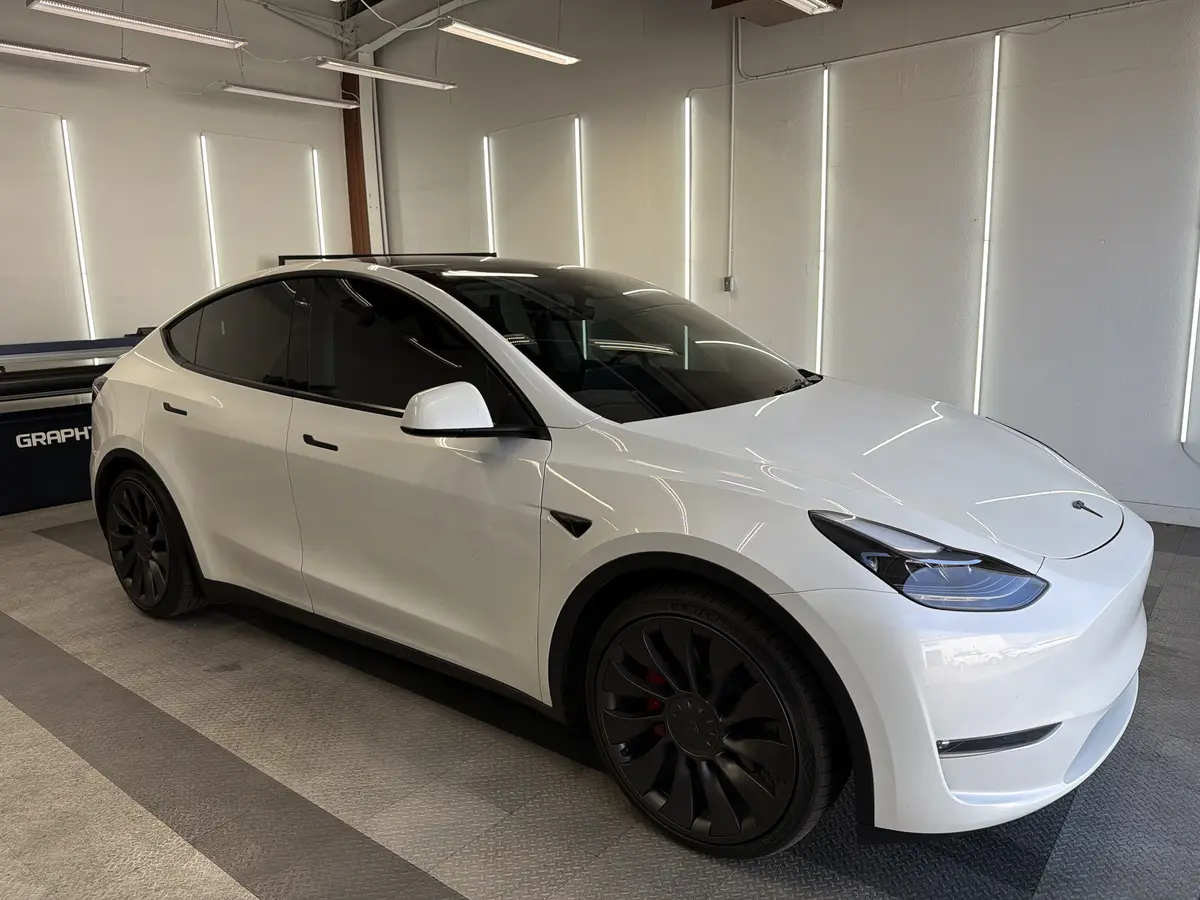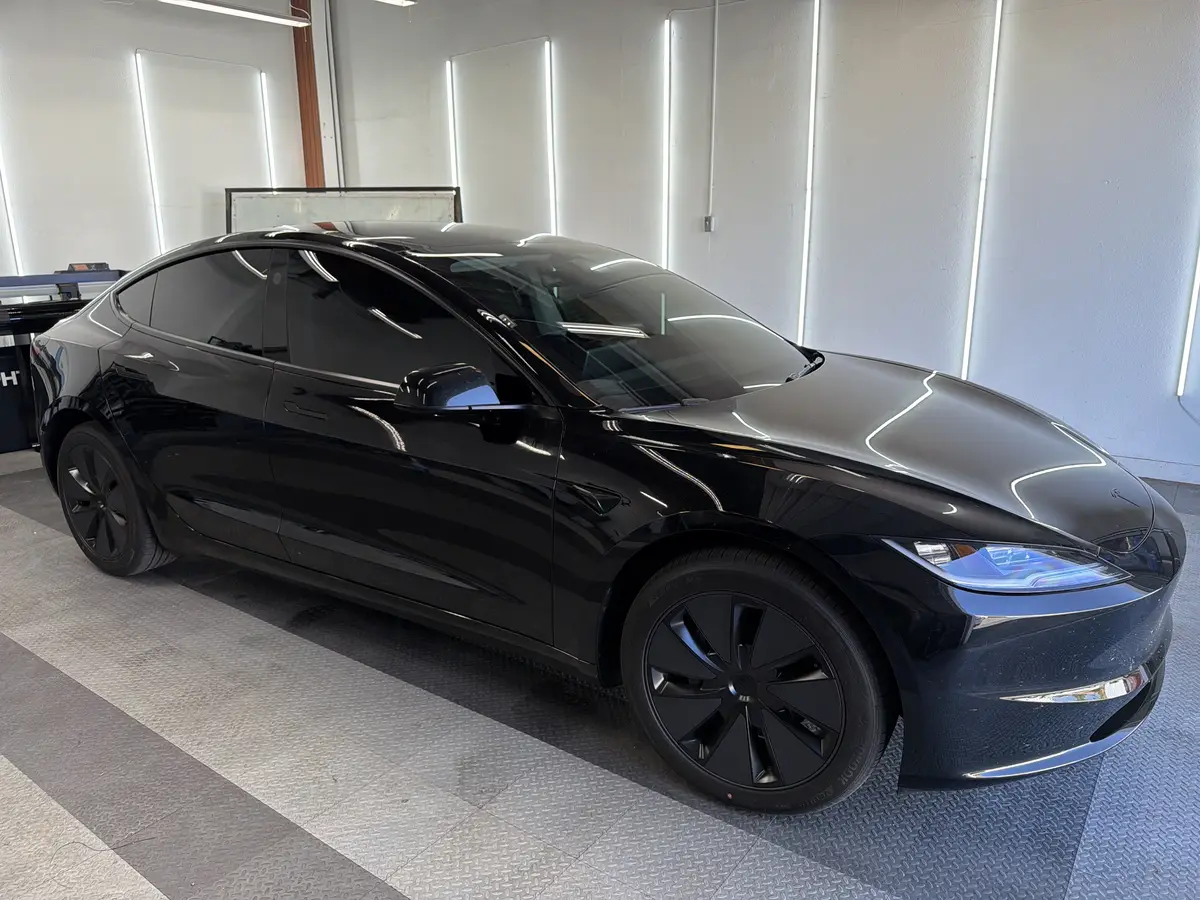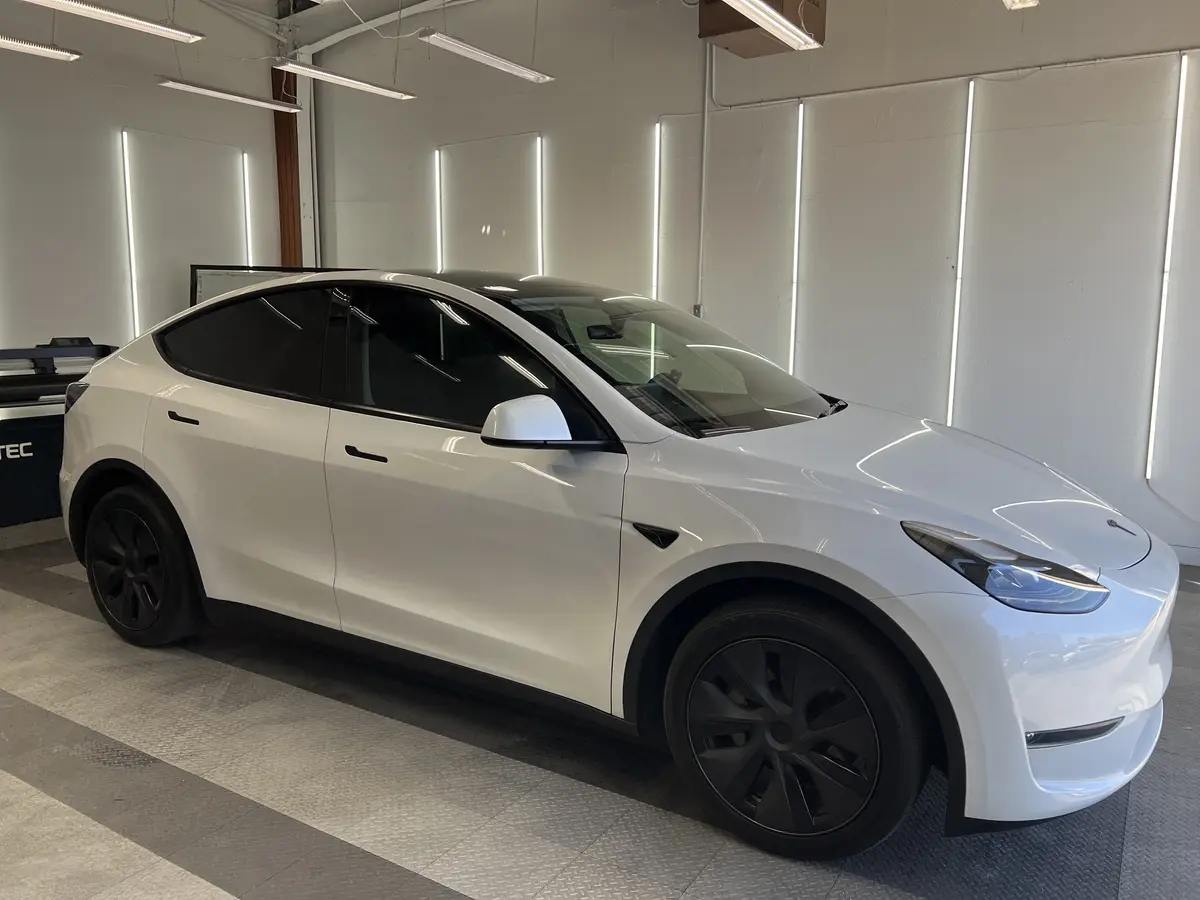
This guide covers Model 3 and Model Y installation specifics — glass panel configurations, recommended shade setups, and Sacramento pricing. For coverage of all EV models including Model S, Model X, Rivian, and Mach-E, see our complete Tesla & EV tinting guide.
The Tesla Model 3 and Model Y are the two best-selling electric vehicles in Sacramento — and across California. Walk through any parking lot in Folsom, Roseville, or Elk Grove and you will see them everywhere. But as popular as these vehicles are, most owners quickly discover the same problem: the expansive all-glass roof and large windshield turn the cabin into a greenhouse, especially during Sacramento's relentless summers where temperatures regularly exceed 100°F.
At Quality Window Tinting, we have been tinting Tesla vehicles since the original Model S arrived in Sacramento. With over 20 years of professional window tinting experience and hundreds of Tesla installations completed, we understand the unique requirements these vehicles demand. This guide covers everything you need to know about tinting your Tesla Model 3 or Model Y — from the specific glass configurations and recommended shade levels to pricing, Autopilot compatibility, and range impact.
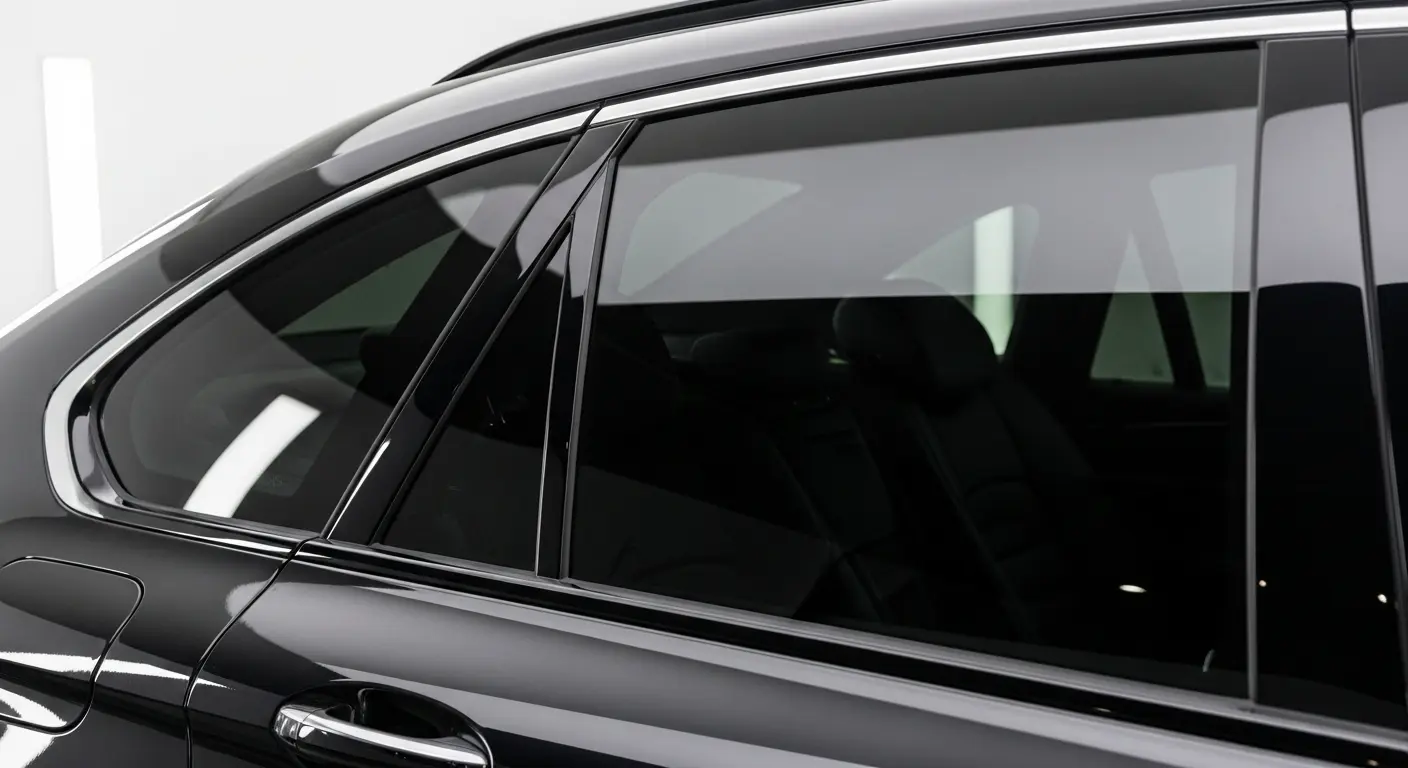
Why Tesla Vehicles Need Ceramic Tint Specifically
Not all window tint is appropriate for a Tesla. The Model 3 and Model Y are fundamentally different from traditional gasoline vehicles when it comes to window film selection. Here is why ceramic window tint is the only film type we recommend for Tesla owners:
- ✓Massive glass surface area — Both the Model 3 and Model Y feature an all-glass roof that stretches from the windshield header to the rear trunk. This is far more glass than any traditional sedan or SUV, which means far more solar heat entering the cabin. Ceramic tint's superior infrared rejection (75-97%) is essential for managing this heat load.
- ✓No signal interference — Tesla vehicles rely heavily on wireless connectivity: Bluetooth for phone keys, WiFi for software updates, LTE for streaming and remote access, and GPS for navigation. Metallic tint films contain metal particles that block these radio frequencies. Ceramic tint is entirely non-metallic and has zero impact on any wireless signal.
- ✓ADAS camera compatibility — Tesla's Autopilot and Full Self-Driving systems use multiple cameras positioned around the vehicle. These cameras must see through glass without distortion or interference. Ceramic tint maintains optical clarity at every shade level, ensuring all camera-based systems function exactly as designed.
- ✓Range preservation — The climate control system is one of the largest drains on an EV battery. By reducing the solar heat entering the cabin, ceramic tint lowers the AC workload, which directly preserves driving range. This is not a theoretical benefit — Tesla owners consistently report measurable range improvements after tinting.
- ✓Interior protection — Tesla's vegan leather seats and minimalist dashboard are directly exposed to UV and infrared radiation through the glass roof. Without tint, the interior degrades faster. Ceramic film blocks 99% of UV rays and up to 97% of infrared heat, protecting every surface.
Tesla Model 3 Window Tint: Complete Breakdown
The Tesla Model 3 is Sacramento's most popular EV by a significant margin. Its sleek design and expansive glass create a stunning aesthetic — but also create a very real heat management challenge. Here is what you need to know about tinting a Model 3.
Model 3 Glass Configuration
The Tesla Model 3 has six tintable glass panels: the windshield, two front door windows, two rear door windows, the rear window, and the glass roof. The glass roof on the Model 3 is one large continuous piece that extends from the B-pillar all the way back to the rear window. This single piece of glass is roughly 5.5 square feet of surface area sitting directly above the rear passengers — acting as a solar collector that can raise cabin temperature by 15-20°F compared to a traditional steel roof.
Tesla's factory glass includes UV filtering and some infrared rejection in the roof panel, but the heat rejection is modest. Independent testing consistently shows that Tesla's factory roof glass allows 35-45% of total solar energy to pass through. Our ceramic films reduce that to under 10%.
Recommended Tint Setup for Model 3
Based on hundreds of Model 3 installations, here is the configuration we most frequently install and recommend for Sacramento drivers:
| Glass Panel | Recommended VLT | Notes |
|---|---|---|
| Windshield | 70% ceramic | California legal limit; blocks significant heat while maintaining full visibility |
| Front door windows | 70% ceramic | Must meet CA 70% VLT minimum for front side windows |
| Rear door windows | 20% ceramic | No restrictions on rear windows in CA; provides privacy and strong heat rejection |
| Rear window | 20% ceramic | Matches rear door windows for consistent look |
| Glass roof | 15-20% ceramic | Critical for heat management; reduces cabin temp dramatically |
For a deeper look at shade options and what each percentage looks like in practice, visit our window tint shades guide. For California tint law specifics, see our California tint law page.
Tesla Model 3 Tinting Cost
Professional ceramic window tinting for a Tesla Model 3 in Sacramento typically ranges from $500 to $800 for full coverage including the glass roof. The price varies depending on the ceramic film grade selected and whether you opt for windshield tint. Our standard ceramic package covers all side windows, the rear window, and the glass roof panel. Adding a ceramic windshield tint is an additional investment that many Tesla owners find worthwhile given the massive windshield surface area on the Model 3.
For a detailed breakdown of what drives tinting costs, see our window tinting cost guide.
Tesla Model Y Window Tint: Complete Breakdown
The Tesla Model Y shares the same platform as the Model 3 but has a larger crossover SUV body with significantly more glass. The Model Y has become extremely popular in the Sacramento suburbs — families in Folsom, Roseville, and Elk Grove love the combination of EV efficiency, cargo space, and that panoramic roof. But the additional glass means even more heat entering the cabin, making tint a near-necessity rather than a luxury.
Model Y Glass Configuration
The Tesla Model Y has seven tintable glass panels: the windshield, two front door windows, two rear door windows, the rear hatch window, and the glass roof. The Model Y's glass roof is even larger than the Model 3's — it extends further forward and provides a more expansive overhead view for all passengers. This is visually stunning but thermally challenging. The rear hatch window is an additional large glass surface that the Model 3 sedan does not have, adding to the total solar heat gain.
The total glass surface area on a Model Y is approximately 30% greater than a conventional SUV. Combined with Sacramento's intense summer sun, untinted Model Y owners frequently report uncomfortable cabin temperatures even with the AC running at full blast. The rear passengers — often children in car seats — bear the brunt of the heat from the overhead glass.
Recommended Tint Setup for Model Y
| Glass Panel | Recommended VLT | Notes |
|---|---|---|
| Windshield | 70% ceramic | Larger than Model 3; makes a noticeable difference in heat |
| Front door windows | 70% ceramic | California legal limit for front side windows |
| Rear door windows | 20% ceramic | Provides privacy for rear passengers and strong heat rejection |
| Rear hatch window | 20% ceramic | Large surface area unique to Model Y; important for cargo area protection |
| Glass roof | 15-20% ceramic | Even more critical on Model Y due to larger roof surface area |
Tesla Model Y Tinting Cost
Full ceramic window tinting for a Tesla Model Y in Sacramento typically ranges from $550 to $900 including the glass roof and all windows. The higher cost compared to the Model 3 reflects the additional glass panel (rear hatch), larger overall glass surface area, and the more complex installation required for the SUV body style. As with the Model 3, adding ceramic windshield tint is an optional upgrade that we strongly recommend for maximum heat rejection.
Both Model 3 and Model Y installations include our lifetime warranty. We stand behind every Tesla tint job we perform. See our services page for our complete tinting packages.
Tesla Glass Roof Tinting: Why It Is the Most Important Panel
If you are going to tint only one part of your Tesla, tint the glass roof. This is not marketing — it is physics. The glass roof sits at a nearly perpendicular angle to the midday sun during Sacramento summers. From May through September, the sun is high enough in the sky that the roof glass receives the most direct solar radiation of any window on the vehicle. Our BTU meter testing consistently shows that the roof glass transmits 40-60% more heat per square foot than the side windows.
Adding ceramic tint to the Tesla glass roof reduces heat transmission by 60% or more. In real-world terms, this means the cabin temperature after sitting in a Sacramento parking lot drops by 15-25°F compared to untinted glass. Rear passengers no longer feel the intense overhead heat that makes many people describe the Tesla glass roof as “sitting under a magnifying glass.”
The glass roof tint also eliminates glare for rear passengers, reduces eye strain during long drives, and provides additional UV protection for skin exposed to direct overhead sunlight. For families with children in rear-facing car seats — a common configuration in our Sacramento family neighborhoods — roof tint is arguably a safety feature, not just a comfort one.
We install roof tint as a single piece whenever possible to avoid seams or visible edges. The installation requires specific techniques because Tesla's glass roof has a compound curve that cheap films cannot conform to without wrinkling. This is one of the reasons we recommend coming to a professional tint shop rather than attempting a DIY installation or using a mobile service for roof glass.
Ceramic vs. Carbon vs. Metallic Tint for Tesla: Why Ceramic Wins
We are often asked whether carbon tint is a reasonable alternative to ceramic for Tesla vehicles. The short answer is: ceramic is always the right choice for a Tesla. Here is why each alternative falls short:
Metallic tint is immediately disqualified. Metallic films contain aluminum or other metal particles that reflect solar energy — but those same metal particles block radio frequencies. On a Tesla, this means degraded Bluetooth phone key connectivity, slower LTE streaming, GPS signal loss, potential interference with the car's WiFi connection for updates, and reduced key fob range. Some Tesla owners have even reported Sentry Mode notification delays with metallic film. We never install metallic tint on any electric vehicle.
Carbon tint is a better option — it does not interfere with electronics and provides decent heat rejection in the 40-50% range. However, for the price difference between carbon and ceramic (typically $100-$200 on a full Tesla job), ceramic delivers 20-30% more heat rejection. Given that the entire point of tinting a Tesla is managing the enormous heat load from the glass roof and large windows, the incremental cost of ceramic is easily justified. Our detailed comparison of ceramic tint versus regular tint covers the performance differences in depth.
Ceramic tint delivers 60-70% total solar energy rejection and 75-97% infrared rejection with zero signal interference, zero metallic appearance, and zero risk of purpling or fading. For a vehicle with as much glass as a Tesla Model 3 or Model Y, ceramic is not a luxury upgrade — it is the correct technical specification.
Sacramento's Growing Tesla Community
Sacramento has one of the highest per-capita Tesla ownership rates in the country, and the concentration continues to grow. The Sacramento region — including Folsom, Roseville, Elk Grove, Citrus Heights, Rancho Cordova, and surrounding communities — sees thousands of new Tesla registrations every year. The combination of California's EV incentives, abundant sunshine for solar-powered home charging, and long commute distances make the Sacramento Valley an ideal market for electric vehicles.
Tesla owners tend to be detail-oriented and research-driven. They compare products, read specifications, and want to understand the technical reasoning behind recommendations. We appreciate that approach because it aligns with how we operate. We do not upsell unnecessary products or push premium films where standard ones would suffice. For Tesla vehicles, we recommend ceramic tint because the technical evidence overwhelmingly supports it — not because it costs more.
Many of our Tesla customers find us through Sacramento-area Tesla owner groups, EV forums, and word-of-mouth referrals from other Tesla owners. We have built a strong reputation in the local EV community by delivering consistent, high-quality installations with transparent pricing and honest advice.
Does Window Tint Affect Tesla Range?
This is one of the most common questions we hear, and the answer is encouraging: window tint has a net positive effect on Tesla range, particularly during warm months. Here is the logic:
The climate control system is the single largest auxiliary power consumer in a Tesla. During Sacramento summers, the AC compressor can draw 2-4 kW of power continuously to maintain a comfortable cabin temperature. Over a typical 30-mile commute, that AC load can reduce your effective range by 8-12%. Now, by installing ceramic tint that reduces solar heat gain by 60% or more, the AC system does not need to work nearly as hard. The compressor cycles less frequently and runs at lower power settings.
Real-world data from Tesla owners in hot climates consistently shows range improvements of 3-5% during summer months after installing quality ceramic tint. On a Model 3 Long Range with a 350-mile rated range, that translates to 10-17 additional miles per charge. On a Model Y, the improvement can be slightly higher due to the larger glass surface area being tinted. Over the course of a Sacramento summer, those extra miles add up significantly.
The window film itself adds negligible weight to the vehicle (less than 2 pounds total), so there is no meaningful weight penalty. The net result is a clear positive — better range, more comfortable cabin, and lower energy consumption. For a deeper look at Tesla and EV-specific tinting considerations, visit our comprehensive Tesla and electric vehicle tinting guide.
Autopilot, FSD, and Camera Compatibility
Tesla vehicles equipped with Autopilot and Full Self-Driving (FSD) rely on a suite of cameras mounted around the vehicle perimeter. These cameras must see through the glass to interpret lane markings, traffic signs, other vehicles, pedestrians, and obstacles. Understandably, Tesla owners want to know whether window tint will affect these critical safety systems.
Ceramic window tint does not interfere with Autopilot, FSD, or any Tesla camera system. The cameras operate in the visible light spectrum, and ceramic tint is designed to be optically clear within that spectrum while blocking infrared and UV wavelengths. There is no distortion, no color shift, and no reduction in camera resolution or accuracy.
Our installation process includes specific precautions for Tesla vehicles. We never apply film directly over camera housing areas. On windshield tint installations, we use precision-cut templates that leave camera zones completely clear. After every Tesla installation, we verify that all camera feeds are functioning normally through the vehicle's diagnostics before the customer leaves our shop.
Sentry Mode — Tesla's built-in security camera system — is also completely unaffected by ceramic tint. The side-mounted cameras on the B-pillars and the rear camera all function normally with ceramic film on the adjacent glass. We have confirmed this across hundreds of installations on both Model 3 and Model Y.
Ready to Tint Your Tesla Model 3 or Model Y?
Get a free quote for ceramic window tinting on your Tesla. Same-day installations available. Call us at (916) 282-2577 or book online.
Frequently Asked Questions About Tesla Window Tinting
How much does it cost to tint a Tesla Model 3 in Sacramento?
A full ceramic tint job on a Tesla Model 3 typically costs $500-$800 in Sacramento, depending on the film brand and whether you include the glass roof and windshield. At Quality Window Tinting, we provide all-inclusive pricing with no hidden fees. Our quotes cover all side windows, the rear window, and the glass roof panel. Windshield tint is available as an add-on. Every installation includes a lifetime warranty.
Does window tint interfere with Tesla Autopilot or Sentry Mode?
No. Ceramic window tint does not interfere with Tesla Autopilot, Full Self-Driving cameras, Sentry Mode, or any onboard sensors. Unlike metallic tint films that contain metal particles capable of blocking radio frequencies, ceramic film is entirely non-metallic and non-conductive. We have tinted hundreds of Teslas without a single Autopilot or sensor issue. We also take care to avoid applying film over camera housings and sensor areas.
Should I tint the glass roof on my Tesla Model 3 or Model Y?
Absolutely. The glass roof is the single most impactful area to tint on any Tesla. While Tesla factory glass includes some UV filtering, it allows significant infrared heat to pass through. Adding ceramic tint to the roof reduces heat entering the cabin by 60% or more, eliminates the hotspot on rear passengers, and protects the interior from UV damage. In Sacramento summers, roof tint transforms the driving experience.
What tint percentage is best for a Tesla Model 3 or Model Y?
The most popular configuration among our Sacramento Tesla customers is 20% VLT on the side and rear windows, 15-20% on the glass roof, and 70% ceramic on the windshield (California legal limit for front windows). This combination provides strong privacy, excellent heat rejection, and full legal compliance. We offer shade consultations so you can see each percentage on your actual vehicle before committing.
Does tinting a Tesla void the warranty?
No, window tinting does not void your Tesla warranty. Window film is an aftermarket accessory, and under the Magnuson-Moss Warranty Act, a manufacturer cannot void your warranty for aftermarket modifications unless they can prove the modification caused the specific failure. Professional ceramic tint applied by experienced a certified installer poses zero risk to Tesla electronics, glass, or any vehicle systems.
Tesla Window Tinting Service Area
Our shop at 4847 Auburn Blvd Unit B in Sacramento serves Tesla owners throughout the greater Sacramento area. We regularly tint Tesla Model 3 and Model Y vehicles for customers from:
Whether you are in midtown Sacramento, commuting from Folsom or Roseville, or anywhere else in the Sacramento Valley, we make the tinting process easy. Most Tesla tint installations are completed in about 1-2 hours, so you wait in the Tint Lounge and drive away tinted the same visit.
Other Electric Vehicle Tinting Services
While the Model 3 and Model Y are our most frequently tinted EVs, we work on all electric and hybrid vehicles. If you own a Tesla Model S, Model X, Cybertruck, Rivian, Ford Mustang Mach-E, Hyundai Ioniq, Chevrolet Bolt, BMW iX, or any other EV, visit our comprehensive window tint for Tesla and electric vehicles page for model-specific guidance and pricing. Every EV has unique glass configurations and tinting considerations — we have the experience to handle them all.
Glass is not the only surface worth protecting on a car of this value. If the paintwork is your concern rather than the cabin, paint protection film is a separate product with a separate purpose, and worth understanding before you assume tint covers it.