
At Quality Window Tinting, we have spent over 20 years protecting Sacramento vehicles from the elements. Most people know us for our premium window tinting services, but we also offer a service that completes the protection equation: paint protection film (PPF), also known as clear bra. While window tint shields your cabin, your passengers, and your interior from heat and UV radiation, PPF shields your vehicle's exterior paint from the physical damage that Sacramento roads inflict every single day.
Together, window tint and PPF represent the most comprehensive vehicle protection package available. One protects the glass; the other protects the paint. If you drive in the Sacramento area and care about preserving your vehicle's appearance and resale value, this guide will explain exactly what PPF is, what it costs, and why it has become one of the most requested services at our Auburn Boulevard shop.
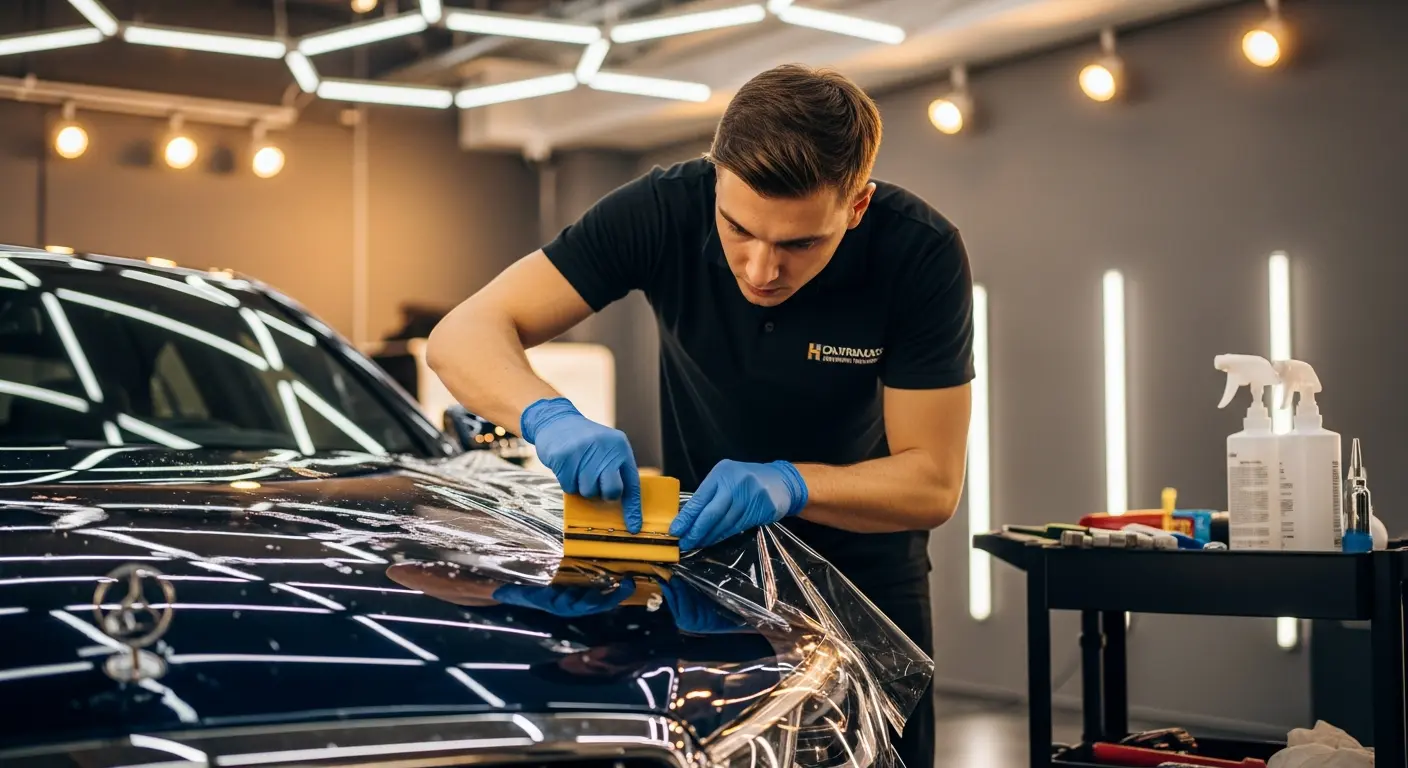
What Is Paint Protection Film? Understanding PPF Technology
Paint protection film is a thermoplastic polyurethane film — typically 8 mil (0.008 inches) thick — that is precision-cut and applied directly to a vehicle's painted surfaces. Originally developed by the U.S. military to protect helicopter rotor blades from sand and debris erosion during the Vietnam War, PPF technology was adapted for the automotive industry in the early 2000s and has advanced dramatically in the past decade.
Modern PPF consists of multiple layers working together: a clear polyurethane base layer that absorbs physical impacts, an acrylic adhesive layer that bonds to the paint without damaging it, and a self-healing elastomeric polymer top coat that eliminates light scratches and swirl marks when exposed to heat. When a rock strikes your hood at highway speed, the PPF absorbs the impact energy and distributes it across the film's surface. The result is that your paint underneath remains pristine — no chip, no crack, no exposure of bare metal to moisture and rust.
The self-healing property deserves special attention because it sounds like marketing hype, but it is real and verifiable. The top coat layer is engineered to reform its molecular structure when warmed. Light scratches from fingernails, car wash brushes, or minor contact literally disappear within minutes under Sacramento's sun. Deeper scratches that penetrate the top coat can be healed with a heat gun or by pouring warm water over the affected area. This means the film continuously maintains its optical clarity and gloss — it does not accumulate the haze of micro-scratches that plague unprotected clear coat over time.
PPF protects against a comprehensive range of threats: rock chips and gravel impacts, road salt and de-icing chemicals, bug acids and bird droppings (which are surprisingly corrosive to clear coat), tree sap, mineral deposits from hard water, minor parking lot scratches, and ultraviolet radiation that causes paint oxidation and fading. It is the single most effective product available for preserving a vehicle's factory paint finish.
Why Sacramento Vehicles Need Paint Protection Film
Sacramento's geography and road conditions create a uniquely hostile environment for automotive paint. Every day, tens of thousands of vehicles travel I-80 toward Reno and Lake Tahoe, Highway 50 toward the Sierra foothills, and Highway 99 through the agricultural corridor. Each of these routes presents specific paint damage risks that PPF is engineered to address.
Interstate 80: The Tahoe Corridor
I-80 from Sacramento through Roseville, Rocklin, and Auburn to the Sierra summit is one of the highest-traffic corridors in Northern California. The road surface deteriorates under heavy truck traffic and seasonal freeze-thaw cycles in the foothills. Loose gravel, construction debris, and sand from winter road treatment create a constant barrage of small projectiles, particularly in the left lane where vehicles travel at higher speeds. We see more rock chip damage on vehicles that regularly drive I-80 than any other route in our service area. The hood, front bumper, and fender edges take the brunt of this abuse — exactly the areas that a partial front-end PPF package protects.
Highway 50 and Highway 99
Highway 50 east through Rancho Cordova, Folsom, and El Dorado Hills carries similar debris risks, compounded by ongoing construction zones that seem to be permanent fixtures. Highway 99 south through Elk Grove introduces agricultural dust, crop residue, and the occasional gravel truck that sends rocks flying in every direction. The stretch between Sacramento and Stockton is particularly notorious for windshield and hood damage. Vehicles that commute these routes daily accumulate paint damage at an accelerated rate — damage that is entirely preventable with PPF.
Sacramento's Extreme UV Exposure
Beyond physical impacts, Sacramento's climate inflicts chronic UV damage on automotive paint. With an average of 269 sunny days per year and summer temperatures that routinely exceed 105 degrees Fahrenheit, vehicles parked outdoors undergo relentless UV bombardment. Over time, this causes clear coat oxidation — that chalky, faded appearance that makes even relatively new vehicles look aged. Red, black, and dark blue paints are especially vulnerable. PPF blocks UV radiation from reaching the paint surface, preventing oxidation and preserving the factory color depth and gloss for years longer than unprotected paint.
Bug splatter is another Sacramento reality that most vehicle owners underestimate. During the warm months, insects accumulate on front-facing surfaces at an alarming rate, and their remains contain acids that etch into clear coat within 24-48 hours if not removed. Bird droppings are even more corrosive — the uric acid in bird waste can permanently damage clear coat in as little as a few hours under direct sun. PPF creates a sacrificial barrier that absorbs these chemical attacks, protecting the paint underneath. When it is time to clean, the film's hydrophobic top coat makes removal effortless compared to scrubbing acidic residue off bare clear coat.
PPF Coverage Options: Choosing the Right Package
Paint protection film does not have to be all-or-nothing. We offer multiple coverage levels designed to match different budgets, driving habits, and protection priorities. Here are the packages we install most frequently at our Sacramento shop:
Partial Front-End Package — The Most Popular Choice
Coverage: Hood, front bumper, front fenders, and side mirrors.
Price range: $800 - $2,000 depending on vehicle size and film brand.
Best for: Daily commuters, new vehicle owners, and anyone who drives on highways regularly. This package protects the surfaces that face oncoming debris head-on and absorb 80% of all rock chip damage. It is the sweet spot between cost and coverage, and it is our most requested package by a significant margin. Sacramento drivers who commute on I-80, Highway 50, or Highway 99 benefit enormously from this level of protection.
Full Front-End Package — Comprehensive Forward Protection
Coverage: Everything in the partial package plus A-pillars, headlights, fog lights, and the full hood (some partial packages cover only a portion of the hood).
Price range: $1,500 - $3,500 depending on vehicle size and film brand.
Best for: Luxury vehicle owners, sports car enthusiasts, and drivers who want maximum front-end protection. Headlight PPF is particularly valuable because replacement headlight assemblies on modern vehicles can cost $1,000-$3,000 per side, and road debris that chips a headlight lens creates moisture intrusion that eventually requires full replacement. The A-pillars and roofline edge are also high-impact zones that most people overlook until the damage is already done.
Full Vehicle Wrap — Ultimate Protection
Coverage: Every painted surface on the vehicle including doors, quarter panels, roof, trunk, and all trim.
Price range: $4,000 - $7,000+ depending on vehicle complexity and film selection.
Best for: High-value vehicles, exotic and collector cars, and owners who want complete protection with zero compromises. A full wrap preserves the entire vehicle in factory-new condition, making it the best investment for maintaining long-term resale value. Vehicles with custom paint, rare colors, or limited-edition finishes are prime candidates for full coverage because the cost of repainting even a single panel can exceed the cost of PPF.
High-Impact Zone Package — Targeted Protection
Coverage: Door edges, door cups (where your fingers grab to open), rocker panels (lower body panels behind the wheels), and rear bumper top (loading area).
Price range: $500 - $1,200 depending on vehicle size.
Best for: Budget-conscious owners, families with kids who open doors into walls, and anyone who frequently loads cargo through the trunk or hatch. These areas accumulate damage from daily use rather than road debris — fingernail scratches in door cups, paint chips on door edges from opening in tight parking spaces, gravel spray on rocker panels, and cargo scratches on the rear bumper lip. The high-impact zone package is also an excellent add-on to a front-end package for well-rounded coverage.
PPF vs Ceramic Coating: Understanding the Difference
This is one of the most common questions we hear, and the confusion is understandable — both products are marketed as “paint protection,” and both are applied by professional detailers. But they are fundamentally different products that serve different purposes.
Paint protection film is a physical barrier. It is a thick, clear urethane sheet (approximately 8 mil) that absorbs impacts and prevents objects from reaching your paint. Think of it as a transparent suit of armor. When a rock strikes PPF, the film absorbs the impact energy, preventing a chip in your paint. When a key scrapes across PPF, the self-healing top coat repairs itself. PPF protects against physical damage.
Ceramic coating is a chemical bond. It is a liquid polymer (measured in microns, not mils) that bonds to the clear coat at a molecular level, creating a semi-permanent hydrophobic surface. Ceramic coating makes the vehicle easier to clean, enhances gloss and color depth, provides UV resistance, and causes water, dirt, and contaminants to bead up and slide off. But it offers zero impact protection — a rock will chip through ceramic coating as easily as it chips through bare clear coat.
The ideal approach — and what many of our Sacramento customers choose — is to combine both products. PPF goes on the high-impact areas (front end, rocker panels, door edges) to absorb physical damage, and ceramic coating goes over the entire vehicle (including over the PPF) to provide hydrophobic protection, enhanced gloss, and easier maintenance. This combination delivers the most comprehensive protection available for automotive paint.
The PPF + Window Tint Combo: Complete Vehicle Protection
Our most popular protection package combines paint protection film with ceramic window tinting. The logic is straightforward: PPF protects every painted surface that faces the road, while ceramic window tint protects every glass surface that faces the sun. Together, they address the full spectrum of environmental threats that Sacramento vehicles encounter.
Window tint blocks 60-70% of solar heat and 99% of UV radiation from entering through the glass, keeping your cabin cooler, protecting your interior from fading and cracking, and reducing your AC workload. PPF blocks rock chips, scratches, bug acids, bird droppings, and UV from damaging your exterior paint. One works from the inside out; the other works from the outside in.
Because we handle both services in-house at our Sacramento shop, customers who bundle PPF and window tint receive package pricing that makes the combined investment more accessible than having each service done separately. We can also coordinate the installation timeline so both services are completed efficiently — often within the same visit for partial PPF packages combined with window tint.
For Tesla and electric vehicle owners, this combination is especially compelling. EVs represent significant financial investments, their large glass panels benefit enormously from ceramic tint, and their paint (particularly Tesla's notoriously thin clear coat) is highly susceptible to rock chip damage. A full front-end PPF package plus ceramic tint on all glass panels is one of the smartest investments a new EV owner can make.
Sacramento Driving Routes and Paint Damage Risk
We have been servicing vehicles in the greater Sacramento area since 2005, and over two decades we have developed a clear picture of which routes and driving patterns create the most paint damage. Here are the scenarios where PPF pays for itself the fastest:
- Weekly Tahoe commuters: If you drive I-80 to Tahoe regularly — for work, skiing, or weekend trips — your front end is absorbing constant gravel and debris impacts, especially through the construction zones between Auburn and Colfax. We see more rock chips on Tahoe commuters than any other driving pattern.
- Highway 50 commuters to Folsom and El Dorado Hills: The ongoing road construction and heavy traffic on this corridor kicks up debris at high frequency. Vehicles commuting eastbound in morning rush take particularly heavy front-end abuse from the concentration of trucks and commercial vehicles.
- Highway 99 corridor drivers: Agricultural vehicles, gravel haulers, and the generally rough road surface between Sacramento and Stockton make this route a paint hazard. The windshield and hood are the primary targets.
- Outdoor parking in Sacramento heat: Vehicles parked outdoors in Sacramento summers — apartment complexes, office lots, shopping centers — absorb extreme UV that accelerates paint oxidation. Adding the chemical damage from bird droppings and tree sap (especially under oak trees), exterior paint deteriorates significantly faster than in milder climates.
- Construction zone driving anywhere in the metro: Sacramento's ongoing infrastructure projects — from the I-5/Highway 50 interchange reconstruction to the countless neighborhood developments in Natomas, Elk Grove, and Rancho Cordova — mean loose gravel, dirt, and construction debris on roads throughout the metro area.
Vehicle Types That Benefit Most from PPF
While any vehicle benefits from paint protection film, certain vehicles and ownership situations make PPF an especially strong investment:
New Vehicles
The best time to apply PPF is when the paint is perfect — day one. New vehicle owners who apply PPF within the first few weeks of ownership preserve their factory paint in pristine condition from the start, maximizing long-term resale value. We recommend scheduling PPF installation before your first highway drive if possible. Many of our customers drive their new vehicles directly from the dealership to our shop.
Luxury and Exotic Vehicles
BMW, Mercedes, Audi, Porsche, Lexus, and similar luxury marques represent significant financial investments, and their resale values are directly tied to exterior condition. A single rock chip on a BMW M-series or Porsche 911 hood can cost $500-$1,000 to repair properly with color-matched touch-up and blending. A full front-end PPF package that prevents dozens of chips over several years easily justifies its cost compared to cumulative repair expenses.
Tesla and Electric Vehicles
Tesla vehicles are some of the most common vehicles we apply PPF to at our Sacramento shop. Tesla's paint and clear coat are widely documented as being thinner than industry averages, making them more susceptible to rock chips and environmental damage. Model 3, Model Y, Model S, and Model X owners consistently report front-end chips within the first few thousand miles of ownership. A partial or full front-end PPF package is one of the most recommended aftermarket upgrades in the Tesla owner community.
Daily Commuter Vehicles
You do not need a luxury car to benefit from PPF. Any vehicle that logs highway miles daily is accumulating paint damage that depreciates its value and appearance. A partial front-end package on a daily commuter vehicle that drives I-80 or Highway 50 can preserve thousands of dollars in paint condition over a typical 5-7 year ownership period. The math makes sense at every price point.
Sports Cars and Enthusiast Vehicles
Corvettes, Mustangs, Camaros, Subaru WRXs, and similar enthusiast vehicles often have lower front ends that sit closer to the road surface, catching more debris than taller vehicles. Their owners also tend to care deeply about appearance and condition. Full front-end or full vehicle PPF wraps are common requests from the Sacramento car enthusiast community.
PPF Pricing in Sacramento: What to Expect
Paint protection film pricing varies based on three primary factors: the amount of coverage (how many panels are wrapped), the film brand and grade selected, and the complexity of the vehicle's body lines. Here is a general pricing guide for our Sacramento PPF services:
| Coverage Package | Sedan / Coupe | SUV / Truck | Exotic / Complex |
|---|---|---|---|
| High-Impact Zones | $500 - $800 | $600 - $1,000 | $700 - $1,200 |
| Partial Front End | $800 - $1,500 | $1,000 - $2,000 | $1,200 - $2,500 |
| Full Front End | $1,500 - $2,500 | $2,000 - $3,500 | $2,500 - $4,000 |
| Full Vehicle Wrap | $4,000 - $5,500 | $5,000 - $6,500 | $6,000 - $7,000+ |
These ranges reflect the use of premium films from XPEL and SunTek. Budget films exist at lower price points, but we do not install them — the performance difference, longevity, and warranty coverage of professional-grade film does not justify the savings of inferior products. Every PPF installation at Quality Window Tinting includes a manufacturer warranty covering yellowing, cracking, peeling, bubbling, and delamination.
For exact pricing on your specific vehicle, we provide free in-person consultations and quotes. The vehicle's make, model, body style, and the condition of the existing paint all factor into the final price. Call us at (916) 282-2577 or request a quote online. For information on our window tinting pricing, visit our window tinting cost guide.