
Your windshield is the largest single piece of glass on your vehicle. It accounts for roughly 30-35% of your car's total glass surface area, and it faces the sun head-on during every morning and evening commute. Yet while most Sacramento drivers think about tinting their side and rear windows, the windshield often gets overlooked — even though it's the glass that contributes the most to cabin heat, UV exposure, and dangerous glare.
At Quality Window Tinting, we've specialized in automotive window tinting for 20+ years from our shop on Auburn Boulevard in Sacramento. In that time, windshield tinting has gone from a niche request to one of our most popular services — and for good reason. Advances in ceramic film technology now make it possible to dramatically reduce heat and UV penetration through the windshield while maintaining full optical clarity and staying completely within California's tinting laws.
This guide covers everything you need to know about windshield tinting: the California legal framework, why ceramic is the only sensible choice for windshields, real performance data, Sacramento-specific driving considerations, and what to expect from the installation process.
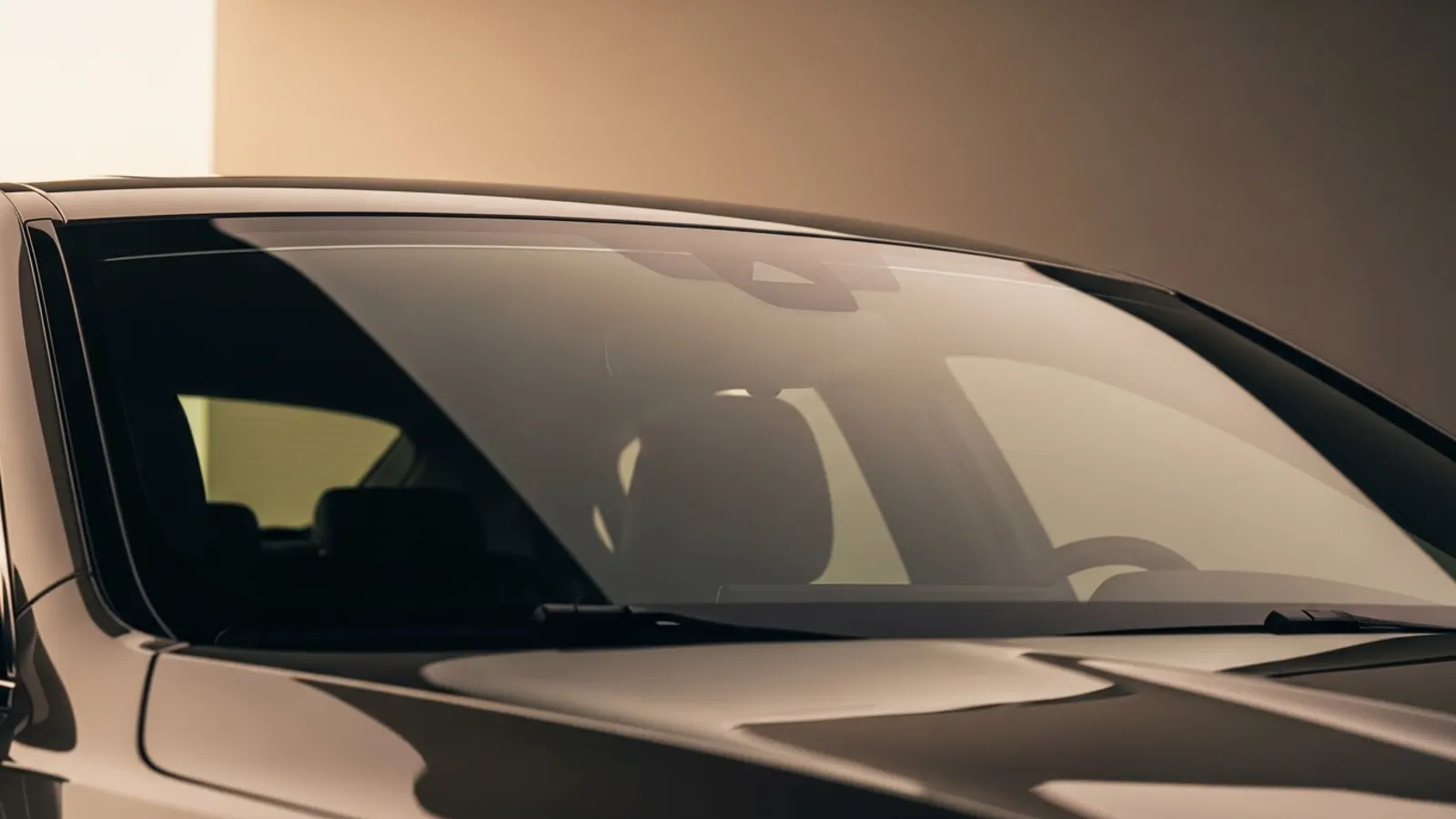
Why Windshield Tinting Matters More Than You Think
Most people associate window tinting with the darker films on side and rear windows. But the physics of solar heat gain tell a different story. Your windshield sits at a near-vertical angle directly facing the sun during the most common driving hours. According to research from the Skin Cancer Foundation, untinted windshields (which block UVB but transmit up to 53% of UVA radiation) are a primary contributor to the well-documented pattern of higher skin cancer rates on the left side of the body among American drivers.
Beyond UV exposure, the windshield is responsible for a disproportionate share of cabin heat buildup. In Sacramento, where summer temperatures regularly exceed 100°F and the city ranks among the top 10 sunniest metropolitan areas in the United States with an average of 269 sunny days per year, that solar load through the windshield is relentless. A study by the U.S. Department of Energy found that solar gain through vehicle glass is the primary factor in cabin temperature buildup, with the windshield contributing the largest share due to its size and angle.
The Glare Problem: Safety on Sacramento Roads
Sun glare is more than an annoyance — it's a genuine safety hazard. The AAA Foundation for Traffic Safety has identified sun glare as a contributing factor in thousands of accidents annually nationwide. Their research shows that the risk of a fatal crash increases by 16% during bright sunlight conditions compared to normal daylight. For Sacramento commuters, this is particularly relevant: the morning commute westbound on I-80 and Highway 50, and the evening commute eastbound on those same corridors, places the sun directly in drivers' eyes for months of the year.
Commuters heading south on I-5 or along the Capital City Freeway face similar challenges. Ceramic windshield tint reduces visible glare without darkening the view, alleviating eye fatigue during long drives and improving reaction times in critical moments. This is fundamentally different from wearing sunglasses, which reduce all light uniformly — ceramic film selectively filters infrared energy and reduces glare intensity while preserving color accuracy and contrast.
Eye Fatigue and Long-Term Comfort
Prolonged exposure to intense sunlight through an untinted windshield causes cumulative eye strain. Drivers who commute 30-60 minutes each way — common for Sacramento residents traveling to Roseville, Folsom, or downtown from the suburbs — experience measurable fatigue that worsens over time. Ceramic windshield film reduces the intensity of incoming light in the infrared spectrum, which means less squinting, less eye fatigue, and a noticeably more comfortable driving experience. Many of our customers at Quality Window Tinting describe it as the single upgrade they notice most every time they drive.
California Windshield Tinting Law: What CVC 26708 Actually Says
California's window tinting regulations are governed by California Vehicle Code Section 26708, and they're more nuanced than most people realize. Understanding the specifics is critical because windshield tinting is the area where California law is most restrictive — and where misinformation is most common.
The AS-1 Line Rule
CVC 26708(a)(1) states that no material may be applied to the windshield that reduces light transmission. However, CVC 26708(a)(2) provides a critical exception: non-reflective tint may be applied to the top of the windshield above the manufacturer's AS-1 line. The AS-1 line is typically marked on the glass and sits roughly 4 to 5 inches below the top edge of the windshield. Tint applied above this line is legal regardless of VLT percentage, as it's intended to serve as a sun visor extension.
Full Windshield Clear Ceramic Film
Here is where modern ceramic technology changes the equation. CVC 26708 requires that any material applied to the windshield must allow at least 70% visible light transmission when combined with the factory glass. Since modern automotive windshields typically have 70-78% VLT from the factory, a high-quality ceramic film rated at 90%+ VLT can be applied across the entire windshield and still meet the legal threshold. This is the approach we recommend and install most frequently at our Sacramento shop.
It's worth noting that California vehicle inspections measure the combined VLT of the glass plus any applied film, not the film alone. This means even a virtually clear ceramic film provides substantial heat and UV rejection while staying well within legal limits.
Medical Exemptions (CVC 26708.2)
California Vehicle Code 26708.2 provides a medical exemption for drivers with conditions that require sun protection. With a signed statement from a licensed physician or optometrist specifying the medical necessity, drivers can apply tint that would otherwise not meet the 70% VLT requirement. The exemption document must be carried in the vehicle. If you believe you qualify for a medical exemption, we can advise you on the process and install the appropriate film.
Why Ceramic Is the Only Film We Recommend for Windshields
Not all window film is created equal, and this matters more on the windshield than anywhere else on your vehicle. When you're looking through a film for hours every day, driving at highway speeds, and needing perfect visibility in every condition, the film technology matters enormously. Here's why we exclusively use ceramic and IR ceramic films for windshield applications — and why we'll decline to install other types.
Optical Clarity
Ceramic window film uses nano-ceramic particles that are non-metallic and non-conductive. This construction produces a film with exceptional optical clarity — no color distortion, no haze, and no waviness. When you're driving through Sacramento at 65 mph on Highway 50, you need perfect visibility. Dyed films can develop a purple haze over time. Metallic films create a reflective, mirror-like effect that distorts the view, especially at night when oncoming headlights scatter through the metallic particles. Even carbon film, while better than dyed or metallic options, doesn't match the optical precision of true ceramic technology for a windshield application.
No Signal Interference
Metallic tint films contain metallic particles that interfere with radio frequencies. On side windows, this can be an inconvenience (weak phone signal, spotty GPS). On the windshield, it becomes a genuine problem: toll transponders like FasTrak won't read correctly, GPS navigation loses accuracy, and phone connectivity drops. Many modern vehicles also have ADAS (Advanced Driver Assistance Systems) sensors, cameras, and radar units mounted behind the windshield — these systems depend on clear signal transmission. Ceramic film is completely transparent to radio frequencies, ensuring all your electronics work normally.
Night Driving Performance
Night visibility is the primary concern drivers raise about windshield tinting, and it's a valid question. With a properly chosen ceramic film at 70% VLT (or higher), night driving visibility is essentially unchanged. You're allowing 70% or more of visible light through — the human eye barely registers this difference. Compare this to regular dyed or metallic tints at the same VLT rating, which often appear darker at night due to haze and light scattering. The difference is stark when experienced firsthand.
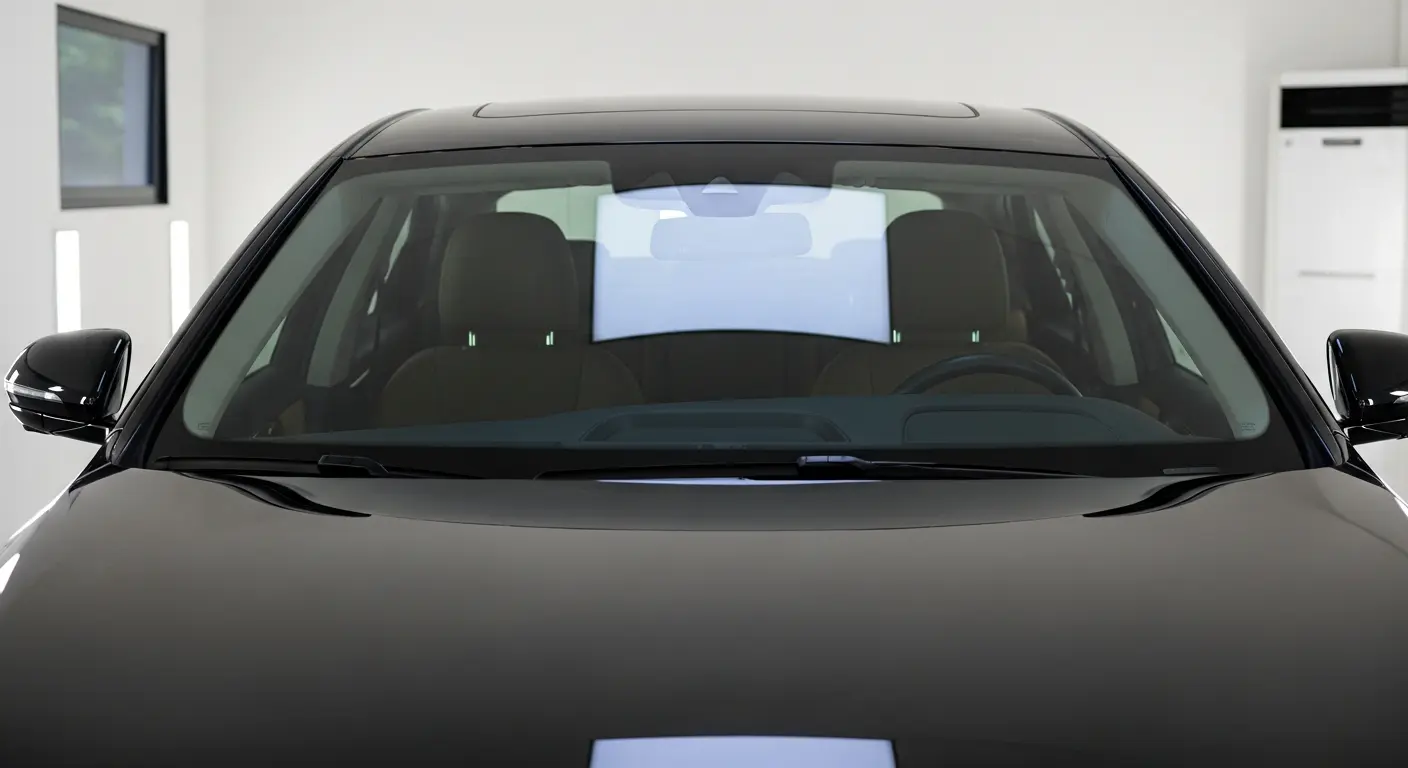
Measurable Benefits of Ceramic Windshield Tint
Windshield tinting delivers quantifiable improvements across several categories. These aren't marketing claims — they're based on manufacturer specifications, third-party testing, and two decades of observations at our Sacramento shop.
- Cabin temperature reduction of 10-15°F from the windshield alone: Because the windshield represents such a large surface area and faces the sun directly, ceramic film on the windshield has an outsized impact on cabin temperature. Our customers consistently report that windshield tinting makes a more noticeable difference than tinting any other single piece of glass.
- 99% UV radiation blocked: Quality ceramic film blocks 99% or more of both UVA and UVB radiation. This protects your skin during daily driving, reduces dashboard and interior fading, and is particularly valuable for the intense Sacramento sun exposure that accelerates interior degradation.
- Reduced AC load and fuel savings: When your windshield blocks a significant portion of solar heat before it enters the cabin, your air conditioning system works less. This translates to measurable fuel savings (gasoline vehicles) or extended battery range (electric vehicles). In Sacramento summers, where AC runs almost continuously during driving, the efficiency gain adds up.
- Infrared heat rejection of 45-85%: Depending on the specific ceramic film chosen, the windshield can reject 45% to 85% of infrared energy. IR radiation is what you feel as heat on your skin and steering wheel — blocking it creates an immediately noticeable improvement in driving comfort.
- Reduced glare intensity: Ceramic film reduces harsh light without darkening the view, meaning less squinting and more comfortable vision during Sacramento's many hours of direct sunshine.
Windshield Film Options: Ceramic vs. IR Ceramic
We offer two categories of windshield-appropriate ceramic film. Both are excellent choices — the difference comes down to how much heat rejection you want and your budget. Here's a direct comparison of the specifications at the 70% VLT level that keeps you California-legal:
| Specification | Ceramic 70% VLT | IR Ceramic 70% VLT |
|---|---|---|
| Visible Light Transmission | 70% | 70% |
| UV Rejection | 99% | 99% |
| Infrared Heat Rejection | 45-55% | 75-85% |
| Total Solar Energy Rejected | 38-45% | 50-60% |
| Glare Reduction | Moderate | Enhanced |
| Signal Interference | None | None |
| Optical Clarity | Excellent | Excellent |
| Night Visibility Impact | Negligible | Negligible |
| Price Range (Windshield) | $150 - $200 | $250 - $350 |
| Best For | UV protection, moderate heat reduction | Maximum heat rejection, premium comfort |
For Sacramento drivers, we generally recommend the IR ceramic option. The additional heat rejection makes a substantial difference when ambient temperatures exceed 95°F, which happens regularly from May through October. The investment difference between the two tiers is modest compared to the daily comfort improvement. See our full pricing guide for complete vehicle tinting costs.
Sacramento Driving: Where Windshield Tint Makes the Biggest Difference
Sacramento's geography and road layout create specific conditions where windshield tinting provides an outsized benefit. If you regularly drive any of these corridors, you already know the glare problem firsthand.
East-West Commutes on I-80 and Highway 50
The most common Sacramento commute corridors — I-80 between Sacramento and Roseville/Rocklin and Highway 50 between Sacramento and Folsom/El Dorado Hills — run almost directly east-west. This means morning commuters heading west get the full force of the rising sun directly through their windshield, and evening commuters heading east face the same on the return trip. Ceramic windshield tint doesn't eliminate the sun, but it dramatically reduces the harshness and heat intensity, making these drives measurably safer and more comfortable.
I-5 and Capital City Freeway
North-south corridors like I-5 and the Capital City Freeway present a different but equally challenging glare pattern. During winter months when the sun sits lower in the sky, south-facing drives catch sustained, low-angle sun that sun visors can't fully block. Windshield tint fills the gap between where your sun visor ends and where the dashboard begins — the critical zone that causes the most dangerous glare situations.
Surface Streets and Parking
Sacramento's grid layout means long, straight stretches of Sunrise Boulevard, Watt Avenue, Arden Way, and Howe Avenue that channel sunlight directly into your field of view at various times of day. And when your car sits in a parking lot at Arden Fair, the Galleria, or any of the hundreds of surface lots across the Sacramento metro, the windshield absorbs and transmits enormous amounts of heat into the cabin. Ceramic windshield tint keeps your car noticeably cooler while parked, which means your AC recovers faster and you're not sitting on a scorching seat when you get back in.
Safety Considerations: What We Want Every Customer to Understand
Windshield tinting is a safety-critical installation. The windshield is your primary viewing surface while driving, and any compromise to visibility is unacceptable. This is exactly why we are selective about what we install and how we install it.
- Zero optical distortion: We test every windshield film we install for optical distortion. Quality ceramic films from Avery Dennison and SunTek pass automotive-grade optical standards. If a film shows any waviness, haze, or distortion, we won't install it.
- No color shift: Some lower-quality films create a yellow or blue tint that alters how you perceive traffic lights, brake lights, and road signs. The ceramic films we use are color-neutral, preserving accurate color perception in all conditions.
- ADAS compatibility: Modern vehicles rely on windshield-mounted cameras and sensors for lane-keeping, collision avoidance, and adaptive cruise control. We take care to ensure film installation does not interfere with these systems. In most cases, a small cutout is made around camera housings to ensure perfect sensor operation.
- Wiper compatibility: Properly installed ceramic film sits beneath the wiper contact area and does not affect wiper operation or longevity. Our installation technique ensures smooth, bubble-free adhesion that withstands daily wiper use indefinitely.
Ready to See What Ceramic Windshield Tint Can Do?
Call us for a free windshield tinting quote. We'll help you choose the right film for your vehicle, driving habits, and budget.
Windshield Tinting Pricing in Sacramento
Windshield tinting is one of the most cost-effective upgrades you can make to your vehicle's comfort and protection. Here's what to expect for pricing at Quality Window Tinting:
- Ceramic 70% VLT windshield film: $150 - $200 for sedans and compact vehicles, $175 - $225 for SUVs and trucks with larger windshields
- IR Ceramic 70% VLT windshield film: $250 - $300 for sedans and compact vehicles, $300 - $350 for SUVs and trucks
- Combo pricing: We offer discounted windshield add-on pricing when combined with a full vehicle tint package. Many customers find that adding windshield ceramic tint to a complete tinting package delivers the best overall value.
All windshield tinting at our shop includes a lifetime warranty against peeling, bubbling, cracking, and discoloration. We use only brand-name Avery Dennison Encore ceramic films (and are also SunTek certified) — no generic or off-brand products. The price includes precision computer-cut film, professional installation, and a thorough quality inspection before you leave.
Considering the long-term return on investment — reduced AC fuel costs, preserved interior condition, added comfort, and UV protection — windshield ceramic tint pays for itself over the course of normal vehicle ownership.
The Windshield Tinting Installation Process
Windshield tinting is the most demanding window film installation on any vehicle. The glass is large, curved, and sits at a compound angle. It requires precision, patience, and experience to achieve a flawless result. Here's what our installation process involves:
1. Surface Preparation
The interior surface of the windshield is meticulously cleaned to remove any dust, oils, adhesive residue, or contaminants. Even a single speck of dust trapped under the film creates a visible imperfection. We use a multi-step cleaning process with professional-grade solutions designed specifically for pre-tint preparation. The area around the windshield — dash, rearview mirror mount, and A-pillar trim — is protected during the process.
2. Precision Cutting and Heat Shrinking
Windshield film is applied as a single piece whenever possible. This eliminates seams that could distort vision or peel over time. The film is first cut oversize and then heat-shrunk on the exterior of the glass to match the compound curvature of the windshield. This heat-forming step is critical — modern windshields have significant curvature that a flat piece of film cannot conform to without precise shrinking. It's a step that separates professional installations from amateur attempts.
3. Application and Squeegee Work
The pre-formed film is applied to the interior of the windshield using a slip solution that allows repositioning. Once aligned, a series of professional squeegees are used to push out all moisture and air from between the film and glass, working from the center outward. This process requires steady, even pressure and practiced technique to avoid trapping bubbles or creating wrinkles. The edges are carefully tucked beneath the gasket or trimmed to within millimeters of the glass edge for a clean, invisible finish.
4. Curing and Aftercare
After installation, the adhesive needs time to cure fully. During the first 3-5 days, small water pockets or a slight haze may be visible — this is normal and disappears as the adhesive dries completely. We advise customers not to clean the interior of the windshield for at least one week after installation, and to avoid using ammonia-based cleaners at any time. Proper tint care ensures your windshield film maintains its clarity and performance for its full lifespan.
Installation Timeline
A windshield-only tint installation typically takes about an hour. Having the windshield done as part of a full-vehicle tint extends the appointment beyond the usual 1 to 2 hours, but it is still a single visit you can wait through. We recommend scheduling in advance, especially during our busy season from April through September when Sacramento's heat drives high demand for tinting services.
How to Choose the Right Windshield Tint
Choosing windshield tint is more straightforward than selecting the best tint percentage for side windows because the legal constraint narrows your options. The real decision is between standard ceramic and premium IR ceramic, and it comes down to your priorities:
- Choose standard ceramic if your primary goal is UV protection and moderate heat relief, and you want the most affordable option.
- Choose IR ceramic if you want maximum heat rejection, drive frequently during peak sun hours, have a long commute, or park outdoors regularly. This is the option most Sacramento drivers choose once they understand the difference.
- Pair with full-vehicle tint for the best overall result. Windshield ceramic tint combined with full ceramic tint on all windows creates a comprehensive heat rejection system for your vehicle.
During your consultation, we measure your existing windshield VLT to confirm the factory glass transmission and ensure the final combined VLT meets California's 70% minimum. This measurement is documented and can be provided if you ever need proof of compliance during a California vehicle inspection.