
Window tint does not last forever. If your vehicle's tint is bubbling, turning purple, peeling at the edges, or looking hazy, it's time for professional removal. In Sacramento's extreme heat, even quality tint degrades faster than in milder climates, and cheap tint can start failing within two to three years.
At Quality Window Tinting, we've removed thousands of old, failing tint jobs over our 20+ years in business. We know exactly how each type of film behaves during removal, which adhesives require specialized solvents, and how to protect your glass and defroster lines throughout the process. This guide covers everything you need to know about tint removal in Sacramento—from recognizing the warning signs to understanding the process and cost.
5 Signs Your Window Tint Needs to Be Removed
Window film degradation is not just a cosmetic issue. Failing tint reduces visibility, creates safety hazards, and can result in a fix-it ticket from CHP or local law enforcement during a California vehicle inspection. Here are the telltale signs that your tint has reached end of life:
1. Bubbling
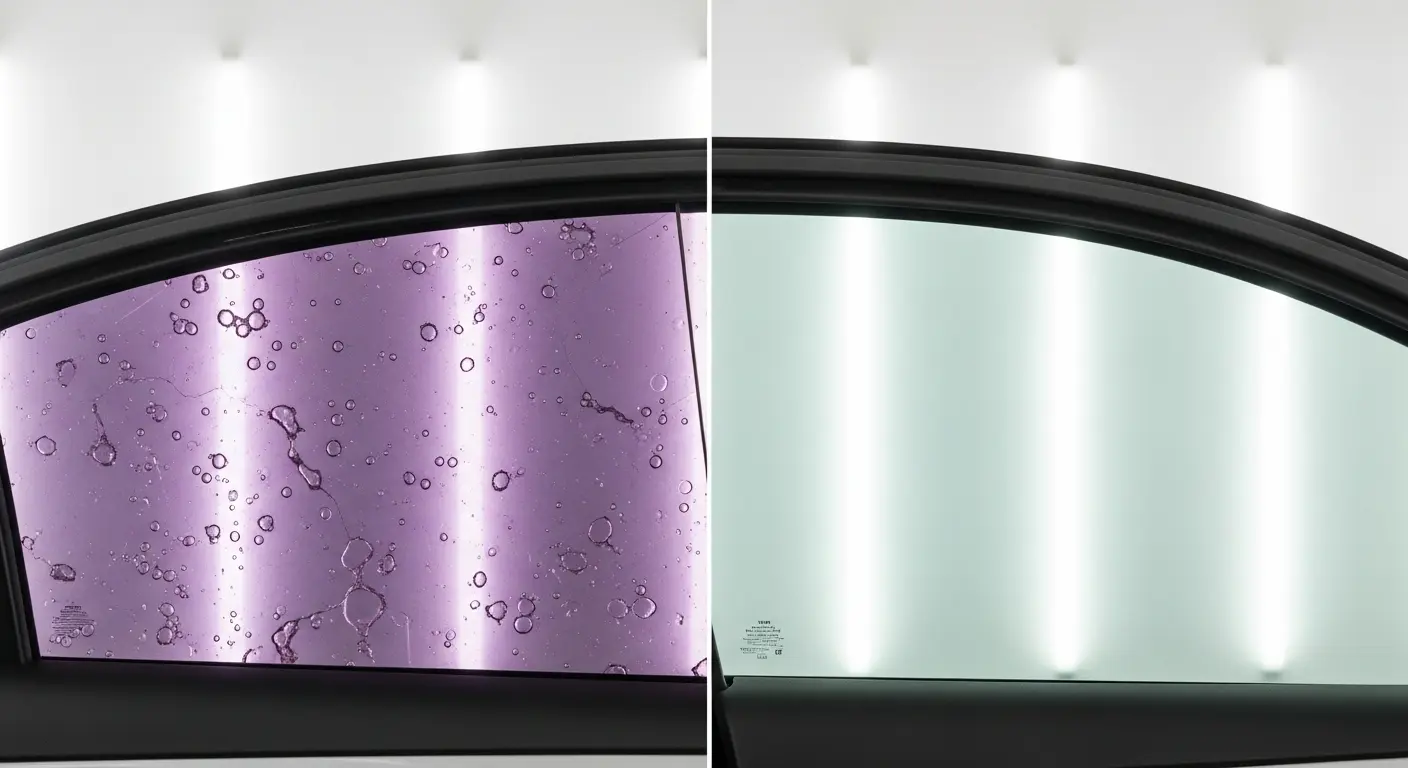
Bubbles form when the adhesive layer between the film and glass breaks down, allowing air pockets to develop. This is the most common sign of tint failure, especially in Sacramento where interior vehicle temperatures regularly exceed 150°F during summer months. Small bubbles tend to multiply rapidly once they start appearing. There is no fix for bubbled tint—the film must be removed and replaced.
2. Purple or Brown Discoloration
Dyed window films contain organic colorants that break down under prolonged UV exposure. The result is an unmistakable purple or brownish tinge that worsens over time. This is particularly common with budget dyed films that lack UV-stabilized dye compounds. Once the color shift begins, the film has also lost much of its heat rejection capability. If your tint has turned purple, it is performing far below its original specifications.
3. Peeling Edges
Peeling typically starts at the top edge of side windows where the glass meets the felt liner inside the door frame. The constant friction of the window going up and down, combined with adhesive degradation from heat, causes the film to separate. Peeling tint looks unprofessional and can interfere with window operation, sometimes causing the film to bunch up and jam the window mechanism.
4. Hazy or Cloudy Appearance
A cloudy or hazy film reduces outward visibility, especially at night. Hazing occurs when the adhesive layer partially delaminates but does not fully separate from the glass. It creates a milky appearance that scattered headlights and streetlights into distracting glare. This is a genuine safety concern—reduced nighttime visibility increases accident risk significantly. Understanding how long window tint lasts helps you anticipate when hazing may start.
5. Failed Vehicle Inspection
In California, degraded or improperly installed tint can result in a fix-it ticket (CVC 26708 violation). CHP officers use tint meters to measure Visible Light Transmission, and deteriorated film often reads darker than its original rating due to adhesive cloudiness and film degradation. If your front side windows no longer meet California's legal tint limits, you will need to remove the tint to clear the citation. We see customers every month who need tint removed after receiving a CHP fix-it ticket on I-80 or Highway 50.
Why Professional Tint Removal Matters: The DIY Reality Check
YouTube is full of tutorials showing people removing tint with a trash bag, ammonia, and sunshine. What those videos rarely show is the aftermath—scratched glass, destroyed defroster lines, and hours spent scraping stubborn adhesive with a razor blade. Here is what actually goes wrong with DIY tint removal:
Scratched Glass
Razor blades are the most common tool recommended in DIY videos, and they are also the most common cause of scratched automotive glass. Tempered side windows are more resistant to scratching, but rear windows with defroster grids are extremely vulnerable. Even a single scratch on tempered glass can weaken its structural integrity. Professional technicians use plastic scrapers and chemical adhesive dissolvers that eliminate the need for aggressive scraping.
Damaged Defroster Lines
Rear window defroster lines are thin metallic strips printed directly onto the glass. They are not embedded in the glass—they sit on the surface, bonded with a conductive adhesive. When old tint is pulled off the rear window improperly, the defroster lines frequently come off with the film. Repairing defroster lines is possible but expensive (typically $150-$400 at an auto glass shop), and the repaired lines often do not perform as well as the originals. This single issue is the number one reason to choose professional removal.
Stubborn Adhesive Residue
Even when the film itself peels off cleanly, the adhesive layer almost always remains on the glass. Different manufacturers use different adhesive formulations—pressure-sensitive adhesives (PSA), dry adhesives, and water-activated adhesives all require different removal approaches. The ammonia-and-trash-bag method works sometimes for PSA adhesives but is largely ineffective against dry adhesives used in premium films. Professional shops stock multiple solvent types and know which one to use for each adhesive type.
The irony of DIY tint removal is that most people attempt it to save $100-$200, then end up spending that amount (or more) on glass scratch removal, defroster repair, or paying a professional to finish the job they started. We regularly see vehicles come into our shop half-stripped with adhesive residue baked onto the glass by Sacramento's summer sun, which makes the remaining work significantly harder and more time-consuming.
Our Professional Tint Removal Process
Our removal process has been refined over 20+ years of hands-on work. Each step is designed to protect your glass, defroster lines, and interior trim while delivering a perfectly clean surface ready for new film or bare glass driving.
Step 1: Assessment and Film Identification
Before we touch the film, we identify what type of tint is on your vehicle. Dyed film, metallic film, ceramic film, and factory-applied tint all have different adhesive systems and require different removal approaches. We also assess the film's condition—heavily degraded tint that has been baking in Sacramento heat for years requires more delicate handling than relatively recent film.
Step 2: Controlled Steam Application
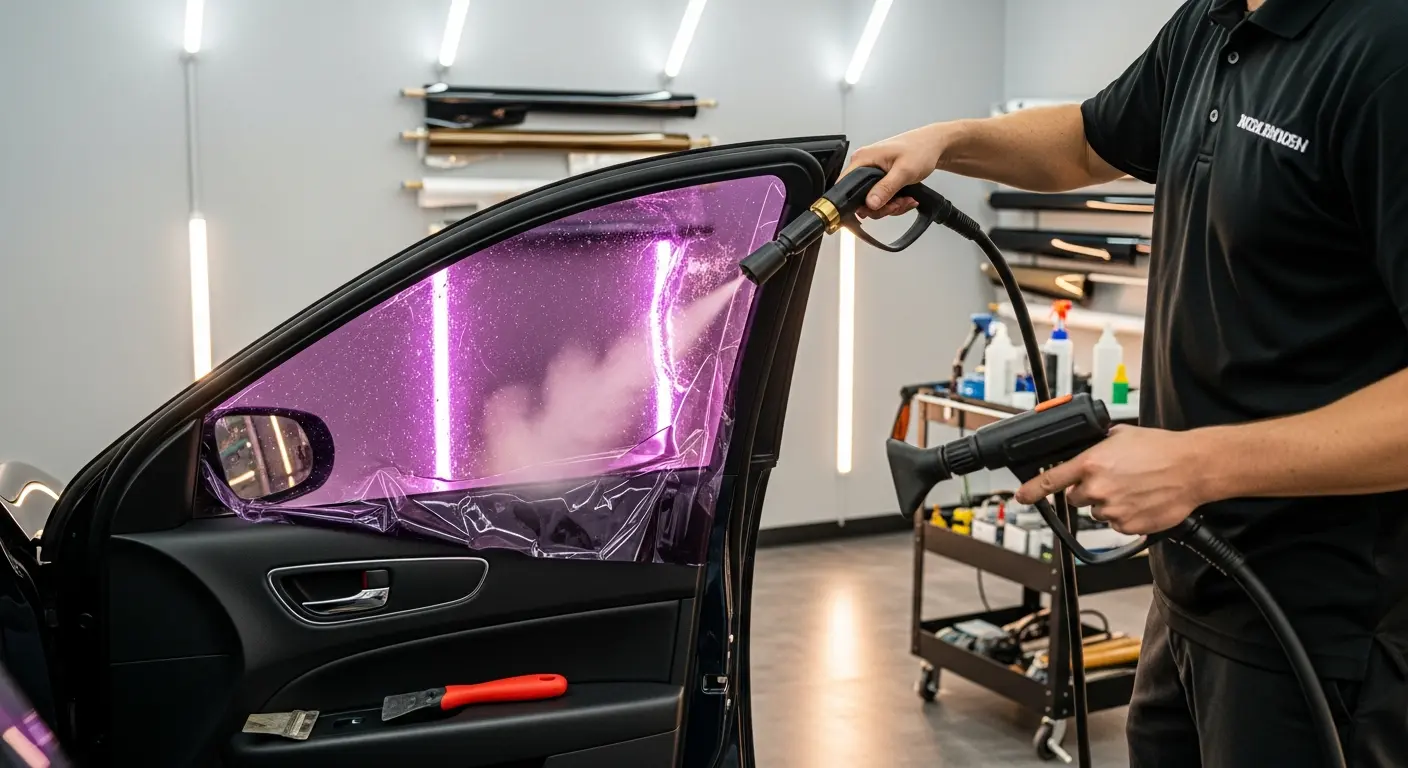
We use commercial-grade steamers to heat the film uniformly across the entire window surface. Steam softens the adhesive bond without overheating the glass or surrounding trim. The temperature is carefully controlled—too low and the adhesive does not release, too high and it can damage interior panels. On rear windows, we pay particular attention to defroster line areas, applying steam in the direction of the lines to minimize stress on the grid.
Step 3: Film Removal
Once the adhesive has been adequately softened, we peel the film at a controlled angle and speed. Rushing this step is how defroster lines get damaged—Andrey maintains a slow, consistent pull that separates the film from the glass without lifting the defroster grid. For particularly stubborn areas, we re-steam and repeat rather than forcing the film.
Step 4: Adhesive Dissolving and Cleaning
After the film is off, the real work begins. We apply specialized adhesive removers formulated for automotive glass. These solvents break down the remaining adhesive without damaging the glass surface, defroster lines, or rubber window seals. We use soft, non-abrasive tools to work the dissolved adhesive off the glass, followed by a thorough cleaning with automotive glass cleaner.
Step 5: Final Inspection and Prep
Every window gets a final inspection under bright lighting to ensure no adhesive residue, scratches, or contamination remain. If you are having new tint installed, this step ensures the glass surface is perfectly clean for optimal adhesion of the new film. We also test rear defroster functionality to confirm everything works properly. Learn more about what to expect during tint installation if you are planning to retint after removal.
Types of Window Tint We Remove
Not all tint films are created equal, and they certainly do not all come off the same way. Each type of film presents unique challenges during removal. Here is what we encounter most frequently:
| Film Type | Removal Difficulty | Key Challenge |
|---|---|---|
| Dyed Film | Moderate | Adhesive hardens with age; film often separates from adhesive layer, leaving residue |
| Metallic Film | Moderate-High | Metal particles can create a gritty adhesive residue; requires specific solvents |
| Ceramic Film | Low-Moderate | Premium adhesives tend to release cleaner; newer ceramic films are easier to remove |
| Factory Tint | N/A (not removable) | Built into the glass during manufacturing; cannot be removed. Aftermarket film can be applied over it |
| Cheap / No-Name Film | High | Low-quality adhesives bake onto glass; often requires extended soaking and multiple passes |
Understanding the differences between ceramic and regular tint helps explain why some films are harder to remove than others. Premium films from brands like Avery Dennison and SunTek use higher-quality adhesives that are designed for clean removal when the time comes, while bargain films often use cheaper adhesives that deteriorate unpredictably.
The Sacramento Heat Factor: Why Tint Fails Faster Here
Sacramento's climate is one of the harshest environments for window film in the country. The National Weather Service Sacramento office reports an average of 73 days per year above 90°F, with peak summer temperatures frequently exceeding 105°F. Your parked vehicle's interior can reach 150-170°F on those days, and the glass surface temperatures can be even higher.
This extreme thermal cycling—scorching days followed by cooler nights—accelerates adhesive breakdown far faster than in coastal or northern climates. A tint job that might last 8-10 years in San Francisco often starts failing at 4-6 years in Sacramento. Budget films from non-certified installers can show signs of failure within 1-2 years.
This is also why we strongly recommend investing in quality film from the start. Cheap tint is not a bargain when you factor in the cost of removal and replacement after just a few Sacramento summers. Our guide on whether window tinting is worth it breaks down the real cost-benefit analysis for Sacramento drivers, and our tint care guide explains how proper maintenance can extend your film's lifespan.
Dealing With Failing Tint?
Do not let bubbling, peeling, or purple tint compromise your visibility and vehicle appearance. Quality Window Tinting offers professional tint removal with same-week appointments. Call us at (916) 282-2577 or book online for a free estimate.
Schedule Tint RemovalTint Removal + Retint Combo Packages
The vast majority of our tint removal customers do not want to drive around with bare glass. Over 80% of removals are followed by a fresh tint installation, which is why we offer bundled removal-plus-retint packages that save you both money and time.
When you bundle removal and installation, you benefit from:
- Discounted pricing: Combo packages are less expensive than booking removal and installation separately
- Single appointment: We remove the old tint and install new film in one visit, so your vehicle is only in the shop once
- Optimal surface prep: The glass goes directly from professional cleaning to new film application with no time for dust or contamination to settle
- Upgrade opportunity: Most customers who had budget dyed tint upgrade to ceramic tint during the retint, getting dramatically better heat rejection and longevity
Check our Sacramento window tinting cost guide for detailed pricing on fresh installations, and review our tint percentage guide to choose the right shade for your new film.
Tint Removal Pricing in Sacramento
Our tint removal pricing is transparent and based on the scope of work. Here are our typical price ranges:
| Service | Price Range | Details |
|---|---|---|
| Single Window Removal | $25-$50 | Per window; includes adhesive cleaning |
| Rear Window Only | $75-$125 | Defroster-safe removal; most time-intensive single window |
| All Side Windows | $100-$175 | Front and rear side windows; sedan or coupe |
| Full Vehicle Removal | $150-$300 | All windows including rear; price varies by vehicle size |
| Removal + Retint Combo | Save 15-20% | Bundle discount when combining removal with new tint installation |
Pricing can vary based on the condition of the existing tint, the type of adhesive used, and vehicle size (SUVs and trucks with additional windows cost more). We provide a firm quote before starting any work—no surprises. Call (916) 282-2577 for an exact quote on your vehicle.
What to Expect: Before and After Tint Removal
Knowing what to expect helps you plan your appointment and set realistic expectations for the results:
Before Your Appointment
- Remove any personal items from window sills, dashboards, and rear decks
- Ensure the vehicle is reasonably clean (exterior wash is not required but helpful)
- Let us know if you want to schedule a retint at the same time so we can reserve materials
- Plan for 1-3 hours depending on the number of windows and tint condition
After Removal
- Crystal-clear glass: Windows will be completely free of film, adhesive residue, and contamination
- Improved visibility: Especially noticeable if your old tint had hazing or discoloration
- Functional defrosters: We test rear defroster operation before returning your vehicle
- Ready for retint: If you are having new film applied, the glass is prepped and ready for immediate installation
- More sun exposure: Without tint, you will notice increased heat and glare—this is one reason most customers retint the same day
Why Sacramento Drivers Trust Us for Tint Removal
Tint removal is not a glamorous service, but it requires genuine expertise to do correctly. Here is why Andrey is the right choice:
- 20+ years of experience: Founded in 2005, we have seen every type of tint failure and every adhesive formulation on the market
- Avery Dennison and SunTek certified: Our certifications mean we are trained on professional film handling, including removal best practices
- Defroster-safe guarantee: We take extra care with rear windows and stand behind our work
- Clean, professional shop: Located at 4847 Auburn Blvd Unit B, Sacramento, our controlled environment ensures quality results regardless of weather
- Transparent pricing: We quote before we start and never add hidden fees
- Convenient combo service: Removal and fresh installation in a single appointment saves you time and money
Frequently Asked Questions About Tint Removal
How much does tint removal cost in Sacramento?
Our film removal is $150 flat per the shop board — that covers a standard full-vehicle removal. Heavily degraded or baked-on tint that has to be scraped in sections can run higher because the adhesive requires more careful removal to avoid scratching the glass or damaging rear defroster lines. Removal paired with a fresh installation is often the better value because most of the labor overlaps.
Can I remove window tint myself with a hairdryer or steamer?
While DIY removal is technically possible, it carries significant risks. Improper technique frequently scratches glass, damages rear defroster lines, or leaves stubborn adhesive residue that requires professional cleaning anyway. Most customers who attempt DIY removal end up paying more to fix the damage than professional removal would have cost in the first place.
How long does professional tint removal take?
Most vehicles take 1-3 hours depending on the number of windows and the condition of the existing tint. Older, heavily degraded tint that has baked onto the glass in Sacramento heat can take longer because the adhesive requires more careful removal to avoid damage.
Will tint removal damage my rear defroster lines?
Not when done by a professional. Defroster line damage is the most common consequence of amateur tint removal. Andrey uses controlled steam and specialized techniques that soften the adhesive without pulling on the thin defroster grid printed on the glass. In over 20 years of tint removal, we have maintained an excellent track record of preserving defroster functionality.
Should I remove old tint before getting new tint installed?
Absolutely. New tint should never be applied over old film. Layering tint creates bubbling, poor adhesion, and an uneven appearance. The glass surface must be completely clean and residue-free for new film to bond properly. We offer removal-plus-retint packages that streamline the process and save you money.
Get Your Tint Removed the Right Way
Failing window tint is more than an eyesore—it reduces visibility, lowers your vehicle's appearance, and can result in a fix-it ticket if it no longer meets California's legal requirements. Professional removal ensures your glass stays scratch-free, your defroster lines remain intact, and your windows are perfectly prepped for fresh film.
At Quality Window Tinting, we make tint removal straightforward and stress-free. Whether you need a single window stripped or a full vehicle removal with a premium retint, we handle it with the same attention to detail that has built our reputation over 20+ years. Browse our full range of services, read more about tinting costs in Sacramento, or contact us to schedule your appointment today.
Serving the Greater Sacramento Area
Quality Window Tinting provides professional tint removal and window tinting services throughout: