
Recreational vehicles represent one of the largest personal investments most families will ever make—second only to a home. Yet the massive glass area that gives you those breathtaking panoramic views on the road also creates serious challenges: punishing heat buildup, relentless UV exposure that destroys interiors, and zero privacy when parked at campgrounds. Professional window tinting solves all three problems and pays for itself in comfort, protection, and energy savings.
At Quality Window Tinting, we've been serving Sacramento's RV community for over 20+ years. As Avery Dennison certified installers (also SunTek certified), we understand that RV glass presents unique challenges that standard automotive shops aren't equipped to handle—curved windshields, oversized panoramic windows, dual-pane insulated glass, and roof skylights all demand specialized knowledge and film selection.
Sacramento sits at the crossroads of some of California's greatest RV destinations—Lake Tahoe, Gold Country, the Sacramento Delta, Yosemite, and the Northern California coast. Whether you're a weekend warrior heading to Folsom Lake or a full-timer chasing the seasons, this guide covers everything you need to know about protecting your RV with professional window film.
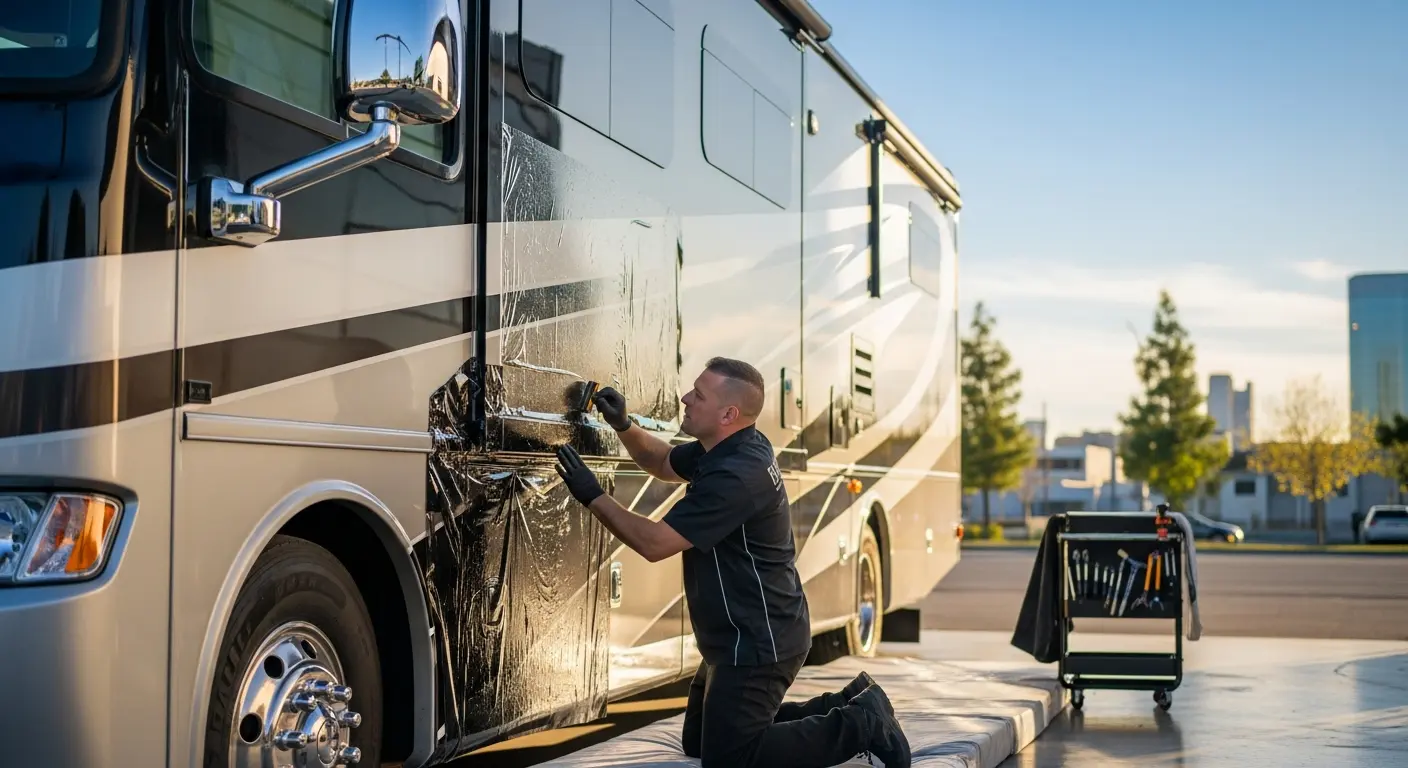
Why RVs and Motorhomes Need Window Tinting More Than Any Other Vehicle
The average passenger car has roughly 30-40 square feet of glass. A Class A motorhome? Upwards of 100-150 square feet. That's three to five times the solar exposure, which means the problems caused by untreated glass—heat, UV damage, glare, and privacy loss—are amplified dramatically in recreational vehicles.
Extreme Heat Buildup in Large Glass Cabins
According to the U.S. Department of Energy, solar heat gain through windows is responsible for approximately 40% of a building's cooling load—and the same physics apply to your RV. Sacramento summer temperatures routinely exceed 100°F from June through September. Inside an untinted RV parked in direct sun, cabin temperatures can reach 140-160°F within minutes. Even while driving, the greenhouse effect created by all that glass forces your rooftop AC and dash air conditioning to work at maximum capacity, burning through generator fuel or draining your battery bank.
Quality ceramic window film reduces interior temperatures by 15-20°F, which translates directly into lower energy consumption, faster cool-down times, and a cabin that actually feels comfortable when you step inside after a day of hiking or sightseeing. For those brutal Sacramento summers, that difference is transformative.
UV Damage to RV Interiors Is Accelerated and Expensive
Ultraviolet radiation is the primary driver of interior degradation in recreational vehicles. The Skin Cancer Foundation notes that standard glass blocks UVB but allows 60-70% of UVA rays through. In an RV with massive glass area, this means your leather upholstery, wood cabinetry, dashboard, fabrics, and flooring are under constant UV assault.
Replacing faded or cracked RV furniture, dashboard components, and cabinetry can cost $5,000-$15,000 or more—far exceeding the cost of professional tinting. Premium window film blocks up to 99% of UV radiation, dramatically extending the life of your RV's interior. This preservation directly impacts resale value; according to industry data, well-maintained RV interiors can retain 15-25% more value at trade-in compared to sun-damaged units. Understanding whether window tinting is worth it becomes an easy calculation when you factor in interior replacement costs.
Privacy and Security at Campgrounds
RV parks and campgrounds pack sites close together. Without tint, your living space is essentially a fishbowl—anyone walking past can see your electronics, personal belongings, and daily activities. Window tint provides daytime privacy without the claustrophobic feeling of drawn curtains or blinds. At night, interior lighting still requires shades, but tint adds a valuable additional layer of visual security that deters opportunistic theft and preserves your sense of personal space.
Glare Reduction for Safer Driving
Operating a large motorhome requires maximum visibility and concentration. Windshield and side window glare from low-angle Sacramento Valley sun—especially common during morning and evening commutes on I-5 and Highway 99—creates dangerous driving conditions. Ceramic tint reduces visible glare by 40-60% without dimming your view, improving reaction times and reducing eye fatigue during long drives. For those heading over Donner Pass or through the winding roads of Gold Country, reduced glare is a genuine safety enhancement.
Types of RVs We Service
Every class of recreational vehicle has distinct glass configurations that require different approaches. Andrey has hands-on experience with all major RV categories and manufacturers.
| RV Type | Typical Window Count | Special Considerations | Est. Tinting Time |
|---|---|---|---|
| Class A Motorhome | 15-25 windows | Panoramic windshield, large side glass, dual-pane common | 6-8 hours |
| Class B Camper Van | 6-12 windows | Deep-curved glass, slider windows, compact access | 4-5 hours |
| Class C Motorhome | 10-18 windows | Cab-over glass, mix of automotive and RV-style windows | 5-7 hours |
| Travel Trailer | 8-15 windows | Frameless windows, crank-out styles, varying shapes | 4-6 hours |
| Fifth Wheel | 10-20 windows | Upper-level glass, large living area windows, slide-out windows | 5-7 hours |
| Toy Hauler | 8-14 windows | Garage area windows, ramp door glass, mixed configurations | 4-6 hours |
We also service popup campers, truck campers, and custom-built expedition vehicles. If it has glass, we can tint it. Contact our services team to discuss your specific RV configuration.
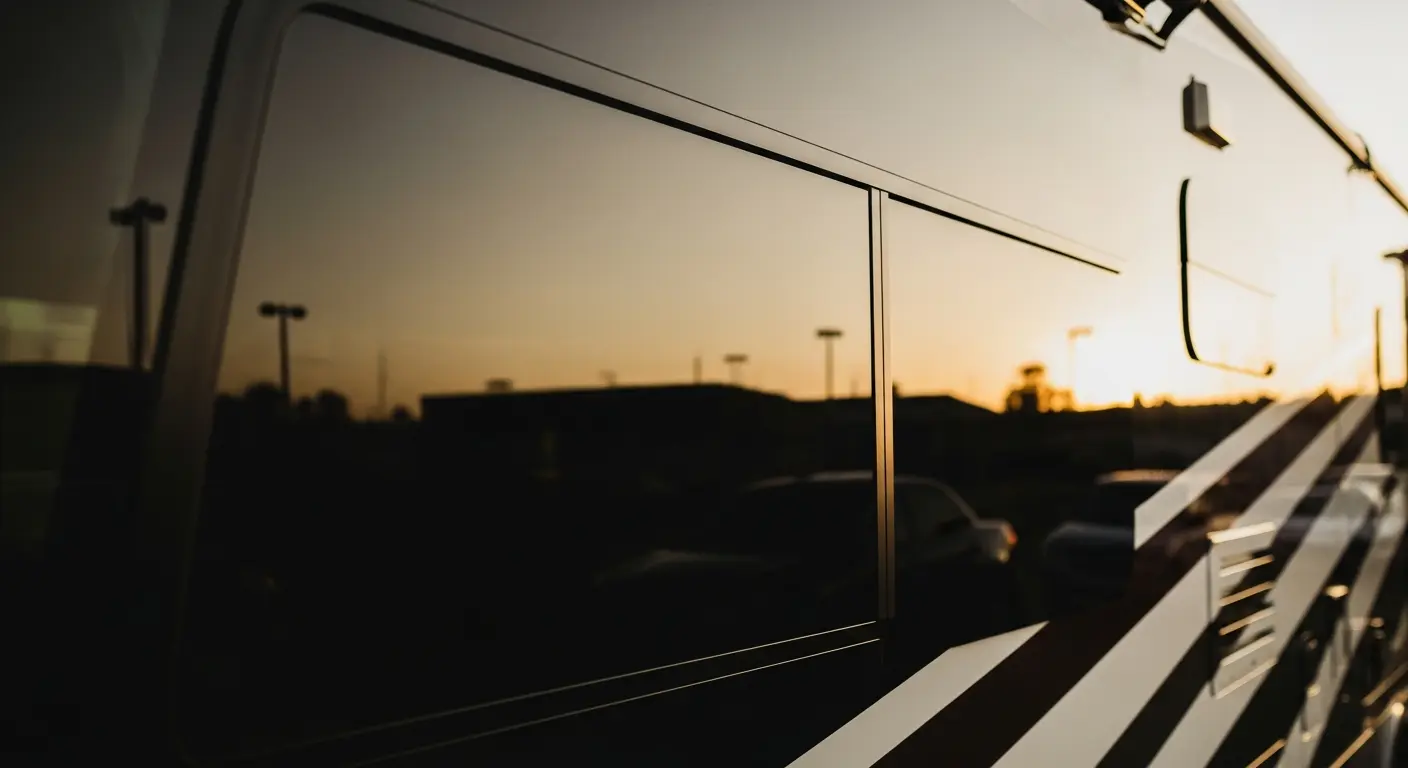
Measurable Benefits of RV Window Tinting
Professional RV window tinting delivers quantifiable improvements across comfort, protection, and operational efficiency. Here are the numbers that matter:
- Interior temperature reduction of 15-20°F: Ceramic film blocks 60-85% of infrared heat energy, making your cabin dramatically more comfortable and reducing AC runtime by up to 30%
- 99% UV rejection: Premium films from Avery Dennison and SunTek block virtually all ultraviolet radiation, protecting occupants and preventing interior fading, cracking, and discoloration
- 40-60% glare reduction: Reduced eye strain and improved visibility translate to safer driving on long trips, particularly on east-west corridors through the Sacramento Valley
- Fuel and energy savings: Lower AC demand means less generator fuel consumption for towable RVs and reduced engine load for motorhomes—savings that compound over thousands of travel miles
- Interior preservation: Leather, vinyl, wood, and fabric surfaces last 3-5x longer when protected from UV, preserving both appearance and resale value
- Shatter resistance: Window film holds glass together on impact, adding a safety layer against road debris, break-in attempts, and accident scenarios
For a deeper dive into tint longevity and value retention, see our guide on how long window tint lasts.
Film Recommendations for RV Applications
Not all window films are created equal, and RV applications demand films that perform under the extreme conditions these vehicles face—prolonged sun exposure, wide temperature swings, and vibration from road travel. We offer three tiers of professional-grade film optimized for recreational vehicles. For a detailed comparison of film technologies, review our carbon vs. ceramic tint comparison and our ceramic vs. regular tint guide.
| Film Type | Heat Rejection | UV Rejection | Signal Safe | Best For |
|---|---|---|---|---|
| Carbon Film | 40-55% | 99% | Yes | Budget-conscious owners, travel trailers, seasonal use |
| Ceramic Film | 55-70% | 99% | Yes | Most RV owners, Class B/C, year-round use |
| IR Ceramic (Premium) | 70-85% | 99% | Yes | Class A, full-timers, desert/extreme heat travel |
Important note on metallic films: We do not recommend metallic window tint for RVs. Metallic particles interfere with GPS navigation, cell phone reception, satellite TV signals, Wi-Fi extenders, and tire pressure monitoring systems—all of which are critical for RV travel. Every film we install for RV applications is non-metallic and signal-safe.
Sacramento: Gateway to California's Best RV Destinations
Sacramento holds a unique position in the RV world. The capital city sits at the confluence of the Sacramento and American Rivers, with direct highway access to an extraordinary range of recreational destinations. According to the RV Industry Association, California leads the nation in RV registrations, and the Sacramento metro area ranks among the top markets for RV ownership in the state.
Here's why window tinting is especially relevant for Sacramento-based RV owners:
- Year-round camping climate: Sacramento's mild winters and proximity to diverse terrain mean local RV owners don't winterize—they use their rigs 12 months a year, maximizing sun exposure and UV accumulation
- Extreme summer heat: With 40-50 days above 100°F annually, Sacramento's summer conditions push untinted RV interiors to dangerous temperatures within minutes of parking
- Lake Tahoe corridor: The I-80 and Highway 50 routes to Tahoe involve intense sun exposure at elevation, where UV radiation is 25% stronger than at sea level
- Delta and river camping: Water reflection amplifies solar exposure by 10-20%, making tint essential for RVs parked along the Sacramento Delta, Folsom Lake, and American River campsites
- Gold Country and Sierra foothills: Popular destinations like Coloma, Placerville, and Auburn feature exposed campgrounds with minimal natural shade
Whether you're heading to a crowded state park or boondocking in the Tahoe National Forest, tinted windows keep your RV cooler, more private, and better protected. Our Sacramento summer heat guide covers regional temperature data in detail.
Special Considerations for RV Window Tinting
RV glass is not car glass. The differences are significant, and inexperienced shops can cause expensive damage. Here's what sets professional RV tinting apart:
Curved and Panoramic Windshields
Class A motorhomes feature massive one-piece or two-piece windshields with compound curves that standard flat film cannot conform to without bubbling, creasing, or lifting. Andrey uses heat-shrinking techniques with specialized tools to mold film to these complex contours. We work with films engineered for high conformability—a property that cheaper films lack entirely.
Dual-Pane (Insulated) Windows
Many mid-range and high-end RVs use dual-pane insulated windows for thermal and acoustic performance. Applying the wrong film to dual-pane glass can cause thermal stress cracking—where absorbed heat expands the inner pane faster than the outer pane, breaking the seal or fracturing the glass entirely. We select films with appropriate absorption levels and total solar energy rejected (TSER) ratings specifically rated for insulated glass units. This is one of the most critical reasons to choose an experienced RV tinting specialist rather than a general automotive shop.
Roof Skylights and Overhead Glass
Many RVs feature roof skylights in bathrooms, hallways, and living areas. These horizontal surfaces receive the most intense solar radiation of any glass on the vehicle. We offer specialized skylight films with maximum heat rejection properties, and Andrey is equipped to safely access and install on overhead surfaces—a task that requires both expertise and proper staging equipment.
Slide-Out and Specialty Windows
RVs with slide-outs have windows that move in and out with the slide mechanism. Film must be applied with proper edge clearances to prevent peeling or interference with seals. Jalousie windows, awning-style windows, and emergency exit windows each require specific installation techniques. Our experience with all major RV manufacturers—including Winnebago, Thor, Forest River, Tiffin, Newmar, and Airstream—means we know the nuances of each brand's window systems.
California Tint Laws for RVs and Motorhomes
California's window tint regulations (California Vehicle Code Section 26708) apply to motorhomes just as they do to passenger vehicles. The windshield may carry non-reflective material only above a line measured 29 inches above the undepressed driver's seat per CVC 26708(c)(1) — usually near the AS-1 line, roughly the top 4 inches on most motorhome cabs. Front side windows must allow 70% or more visible light transmission, and there are no restrictions on rear side windows or the rear window. For a complete breakdown of the legal framework, see our California legal tint guide. Travel trailers and fifth wheels (towable RVs without a driver's position) are not subject to the same windshield and front-window restrictions as motorhomes, giving owners more flexibility in film darkness selection.
Ready to Protect Your RV?
Get a free consultation and custom quote for your specific RV. We'll assess your glass type, recommend the right film, and schedule your installation at a time that works for you.
RV Window Tinting Pricing in Sacramento
RV tinting is a custom job—no two rigs are identical, and pricing depends on the number of windows, glass size, film type, and any specialty glass considerations. Below are general pricing ranges based on our experience with hundreds of RV installations. For a broader look at tinting costs, visit our Sacramento window tinting cost guide.
| RV Class | Carbon Film | Ceramic Film | IR Ceramic (Premium) |
|---|---|---|---|
| Class B Camper Van | $500-$700 | $700-$1,000 | $900-$1,300 |
| Class C Motorhome | $700-$1,000 | $1,000-$1,400 | $1,300-$1,800 |
| Class A Motorhome | $1,000-$1,400 | $1,400-$1,800 | $1,800-$2,500+ |
| Travel Trailer | $500-$800 | $800-$1,200 | $1,100-$1,500 |
| Fifth Wheel | $700-$1,000 | $1,000-$1,400 | $1,300-$1,800 |
All pricing includes professional installation, cleaning, and our standard warranty. Windshield tinting (visor strip or full) is priced separately due to the specialized labor involved. We provide detailed written quotes after an in-person or photo assessment of your specific RV—call (916) 282-2577 to schedule your free consultation.
Our RV Tinting Process: From Consultation to Completion
RV tinting requires a more involved process than standard vehicle tinting. Here's what to expect when you bring your rig to our Auburn Blvd location:
Step 1: Consultation and Glass Assessment
We start with a thorough inspection of your RV's glass. We identify each window type (single-pane, dual-pane, tempered, laminated), measure dimensions, note any existing damage or previous tint, and assess curved or irregular shapes. We also discuss your priorities—maximum heat rejection, darkest legal tint, UV protection, or a specific aesthetic look—and recommend the optimal film accordingly.
Step 2: Custom Measurement and Film Cutting
Unlike cars where pre-cut film templates exist for most models, RV windows are custom-cut on site. We measure each window individually and precision-cut film to exact dimensions. For curved glass, we use heat-shrinking techniques to pre-form the film before application, ensuring a smooth, bubble-free finish on complex contours.
Step 3: Surface Preparation and Installation
Every window is meticulously cleaned to remove dust, debris, adhesive residue, and contaminants that cause bubbles or imperfections. We use professional-grade solutions and lint-free materials. Film is then applied wet, positioned precisely, and squeegeed to remove all moisture and air pockets. Edge sealing ensures long-term adhesion even under the vibration and thermal cycling that RVs experience. For tips on maintaining your new tint, see our window tint care guide.
Step 4: Quality Inspection and Curing
After installation, we perform a detailed inspection of every window under controlled lighting. We check for bubbles, creases, debris inclusions, and edge adhesion. We'll walk you through the curing process—most films require 7-14 days to fully cure, during which small moisture pockets may be visible and are completely normal. We provide detailed aftercare instructions so your tint performs at its best for years to come.
Installation Timeline
Plan for 4-8 hours of installation time depending on your RV type and the number of windows. We recommend scheduling your appointment at least 1-2 weeks in advance, especially during spring and early summer when RV tinting demand peaks before camping season. We can accommodate most RV sizes at our shop, and for oversized rigs, we discuss logistics during the consultation.
Frequently Asked Questions About RV Window Tinting
How much does RV window tinting cost in Sacramento?
RV window tinting in Sacramento typically ranges from $500 to $2,000+ depending on the class and size of your RV. A Class B camper van starts around $500-$800, Class C motorhomes range from $800-$1,400, and large Class A diesel pushers with panoramic windows can reach $1,500-$2,000+. The final cost depends on the number of windows, film type selected, and any specialty glass considerations.
Can you tint dual-pane RV windows?
Yes, but dual-pane (insulated) RV windows require special consideration. Standard dark films can cause excessive heat buildup between the panes, potentially cracking the glass or breaking the seal. We use films specifically rated for dual-pane applications—typically lighter shades or spectrally selective ceramic films that reject heat via infrared blocking rather than absorption. We always assess your specific windows before recommending a film.
How long does it take to tint an RV or motorhome?
Most RV tinting jobs take between 4 and 8 hours depending on the size and number of windows. A Class B camper van may take 4-5 hours, while a large Class A motorhome with 15-20+ windows can require a full 8-hour day. We schedule RV appointments with dedicated time blocks to ensure thorough, unrushed installation. Complex jobs with curved or panoramic glass may occasionally extend into a second day.
Will window tint damage my RV slide-out seals or trim?
No, professionally installed window tint will not damage slide-out seals, rubber gaskets, or interior trim. We use precision cutting techniques and take care to protect surrounding surfaces during installation. The film sits on the interior glass surface and does not interfere with slide-out mechanisms. We have experience with all major RV manufacturers and understand the clearances needed around moving components.
What is the best window tint for RVs in Sacramento heat?
For Sacramento RV owners, we recommend ceramic or IR (infrared rejection) ceramic film. Ceramic tint blocks up to 99% of UV rays and rejects 60-85% of infrared heat without the signal interference issues of metallic films. This is especially important for RVs that rely on GPS, cell boosters, satellite TV, and Wi-Fi systems. For most RV owners, a 30-40% VLT ceramic film provides the ideal balance of heat rejection, visibility, and privacy.
RV Window Tinting Service Area
Our shop at 4847 Auburn Blvd Unit B, Sacramento, CA 95841 serves RV owners throughout the greater Sacramento region. We regularly work with customers from:
Many of our RV customers travel from Elk Grove, Davis, Woodland, Lincoln, Loomis, and Auburn as well. If you're within driving distance and prefer a specialist who understands RV glass, we're worth the trip.